Latest NewsForcing the Vote
From Sacramento to Washington: How State Black Caucus Wins Build the Case for H.R. 40
State caucuses can only repair state harms. Here's how their wins feed the Congressional Black Caucus and the federal reparations claim.
Forcing the Vote · Part 4 of 5
State caucuses can only repair the harms their own states caused. The full debt — slavery protected by the U.S. Constitution, and a century of federally backed exclusion — belongs to the federal government. That's why state wins and federal pressure are one strategy.
What is H.R. 40?
H.R. 40 is the long-running bill to create a federal commission to study and develop reparations proposals for descendants of American slavery. It was first introduced by Rep. John Conyers in 1989 and has been reintroduced in nearly every Congress since. Its number honors the "forty acres" promise.
Track the current version and its cosponsors on Congress.gov.
Who carries it in Congress?
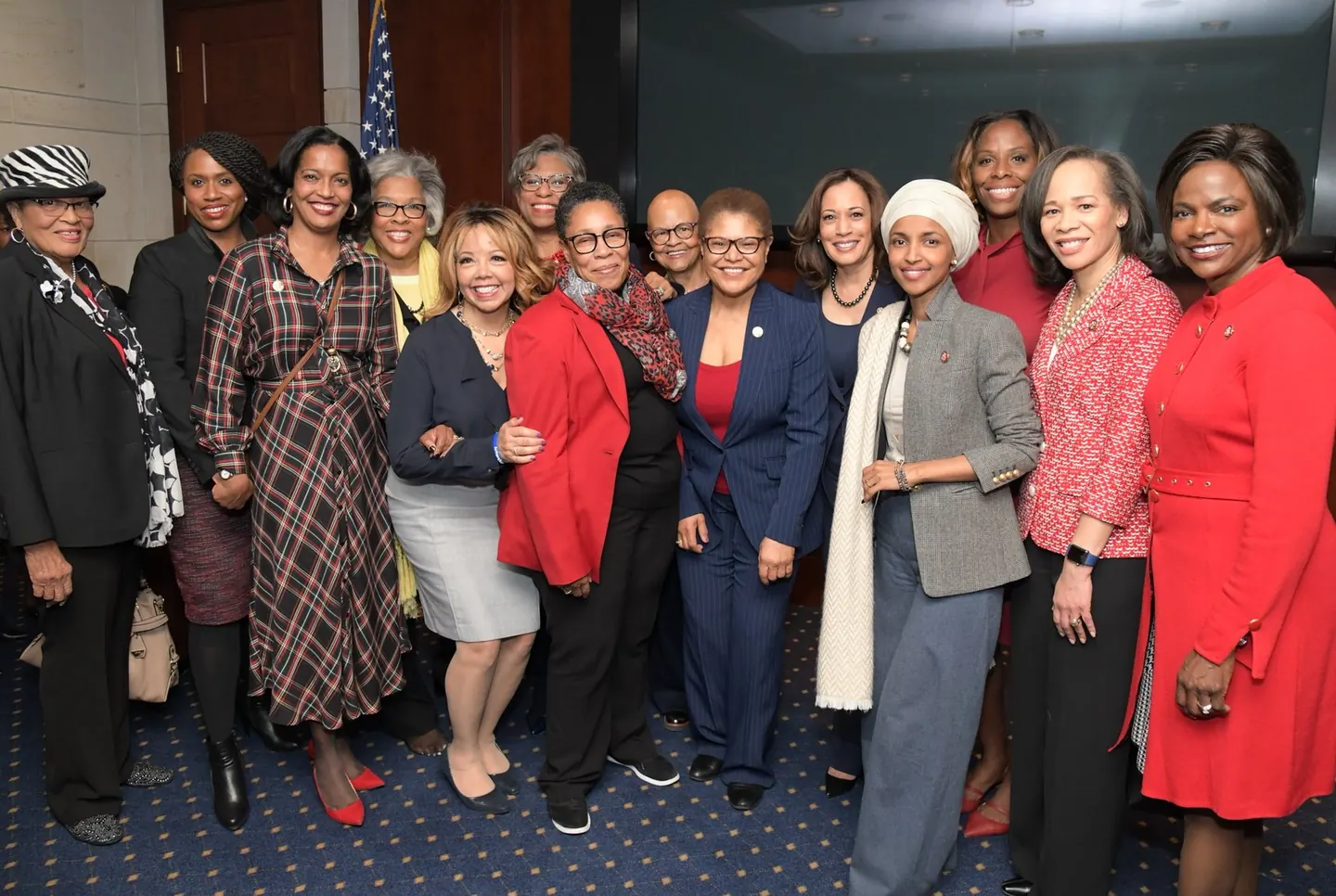
The Congressional Black Caucus (CBC) is the federal counterpart of the state caucuses. Its members have been the main sponsors of H.R. 40 and related bills. Like state caucuses, the CBC can introduce bills but needs House leadership to bring them to a vote.
How do state wins help the federal fight?
- Proof of concept. A working state bureau or eligibility system shows Congress it can be done.
- Model language. Federal staff borrow definitions, like California's lineage standard.
- Data. State commissions document harms county by county — evidence a federal commission would need.
- Political cover. Members of Congress from states that already acted face less risk voting yes.
What changed after the 2026 midterms?
New House and Senate majorities improve the odds of hearings. But hearings are not payments. The same rule from Sacramento applies in Washington: a bill moves only when leadership schedules it, and leadership moves when voters push. See our analysis of the 2026 midterms.
Frequently asked questions
What is H.R. 40?
A federal bill to create a commission to study and develop reparations proposals for descendants of American slavery, first introduced by Rep. John Conyers in 1989.
How do state reparations laws help H.R. 40?
They prove programs can work, supply model eligibility language and data, and give members of Congress political cover to vote yes.
The bottom line
The state capitol and the U.S. Capitol are two ends of one road. Every state caucus win adds weight to the federal claim — and every federal hearing makes it easier for state leaders to say yes.
See the receipts · 2 primary sources
Civic action dispatch
Now act on it
A debt documented is not yet a debt collected. See it, prove it, force it.
- 01Federal + state bills
Step 01 · Monitor
Track the bills
Follow active reparations measures in Congress and the states.
Open tracker - 023,142 counties
Step 02 · Document
Verify the receipts
Find slave schedules, Freedmen's records and land deeds in your county.
Search your county - 03Scripts + caucuses
Step 03 · Mobilize
Organize your district
Call your lawmaker, reach your Black Caucus and start a local group.
Get the playbook
Priority action · 30 seconds
Call your state lawmaker today
Copy the script, then find your representative's number on the community page.
The Reparations Brief
Stay Informed.Stay Connected.Know Your History.
Get important reparations developments, historical research, legislative updates, and original reporting delivered to your inbox.
We use your email only to send The Reparations Brief. Unsubscribe anytime. See our Privacy Policy.