Latest NewsState Policy
Did California Pass Reparations? Inside the Direct Cash Impasse
California documented the debt, adopted a lineage standard and apologized. Three years after its task force report, the state still has not paid descendants a dollar.
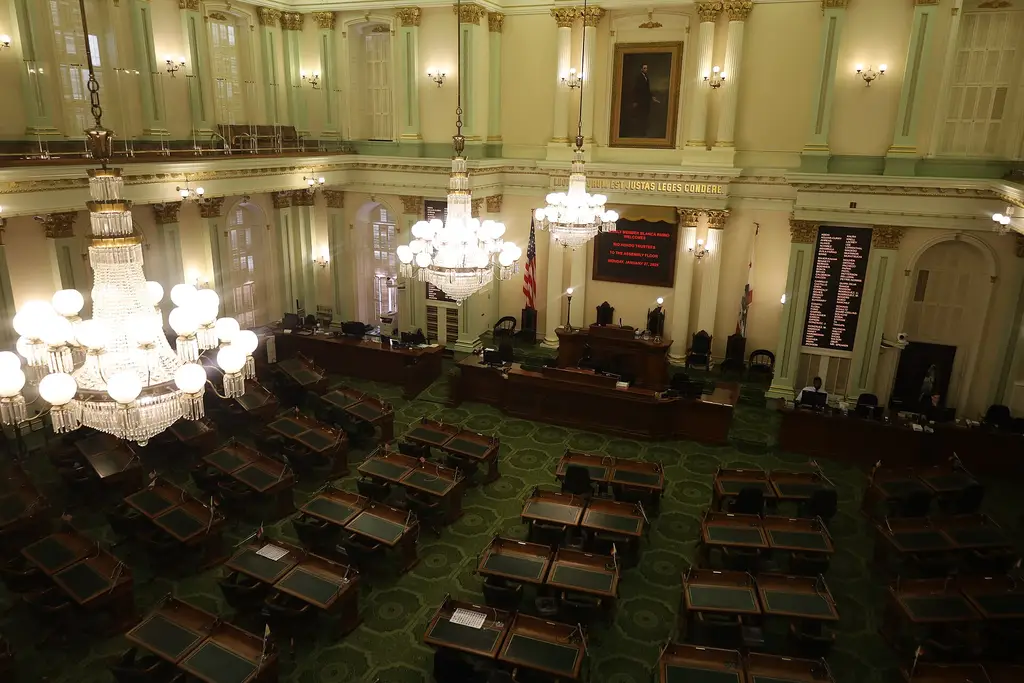
California did more than any state to document what is owed to the descendants of American slavery. Its Reparations Task Force spent two years building the record and, in 2023, delivered a final report that estimated harms in the hundreds of billions of dollars and recommended direct compensation. Since then, the Legislature has passed an apology, built new state machinery and funded research. What it has not done is send a check. That gap — between a documented debt and an unpaid one — is the California impasse.
Did California pass reparations payments?
No. As of late 2026, California has not enacted direct cash reparations to eligible descendants. Lawmakers have advanced pieces of the task force's agenda — a formal apology, an agency to carry the work forward and research on genealogy and eligibility — but no bill appropriating individual payments has become law.
That distinction matters. An apology acknowledges the debt. An agency organizes the paperwork. Only payment settles it.
What did the California Reparations Task Force recommend?
The task force, created by AB 3121 in 2020, was the first state body of its kind in the nation. Its final report, released in June 2023, did three things that still frame every debate in Sacramento:
- Set a lineage standard. In 2022 the task force voted that eligibility should be based on descent from people enslaved in the United States, or from free Black people living in the country before the end of the 19th century — not on race alone.
- Measured specific harms. Economists advising the task force modeled losses from housing discrimination and redlining, mass incarceration and over-policing, unjust property takings, devaluation of Black businesses and health disparities.
- Recommended compensation. The report called for a formal apology and direct payments, alongside more than 100 policy changes in housing, education, health and criminal justice.
The report did not set a final dollar figure for the Legislature. It handed lawmakers a method and a record, and asked them to act.
What has California actually enacted?
| Measure | What it does | Status |
|---|---|---|
| AB 3121 (2020) | Created the Reparations Task Force | Enacted |
| AB 3089 (2024) | Formal state apology for slavery's harms and their legacy | Enacted |
| SB 1403 (2024) | Proposed a state agency to administer reparations | Held by its author in 2024 |
| SB 518 (2025) | Creates the Bureau for Descendants of American Slavery in the Civil Rights Department | Enacted (signed Oct. 10, 2025) |
| SB 437 (2025) | Directs Cal State University research, up to $6 million, on verifying lineage | Enacted (signed Oct. 2025) |
| Direct individual payments | Compensation to eligible descendants | Not enacted |
Each enacted measure builds the infrastructure that payment would require: a definition of who qualifies, a state office to verify it, and an official admission of responsibility. None of them transfers wealth.
Why haven't direct payments passed?
Lawmakers and advocates point to the same pressure points:
- Budget politics. California has faced multibillion-dollar shortfalls since 2023. Leaders have framed cash compensation as unaffordable in a deficit year — the same "bankruptcy" argument raised against federal reparations, applied to a state with one of the largest economies in the world.
- Fear of legal challenge. Opponents argue that payments could face lawsuits under Proposition 209, the 1996 ban on race-based preferences. Supporters answer that a lineage-based standard is not a racial classification: it pays a documented debt to the heirs of a specific injury.
- Sequencing. Many legislators want the bureau, the eligibility rules and the genealogy process built first. Advocates warn that "infrastructure first" can become "payment never."
What does the impasse mean for Foundational Black Americans?
For descendants, the California record is both a victory and a warning. It proved that a government body can study the debt rigorously, adopt a lineage standard and publicly admit responsibility. It also showed how easily the final step — paying what is owed — can be postponed indefinitely.
The lesson for other states and for Congress is direct: a study is not repair, and an apology is not payment. Any reparations measure should be judged by whether it moves money, land or tax relief to the people the debt is owed to — not by how many commissions it creates.
What does California's new governor mean for reparations?
On November 3, 2026, California voters elected Democrat Xavier Becerra governor, defeating Republican Steve Hilton by roughly 31 points. Becerra did not run on reparations. At a January 2026 Urban League forum on Black Californians, Superintendent Tony Thurmond was the only Democratic candidate to put reparations in his answer; no leading candidate championed direct cash payments.
Becerra has signaled he will continue many of outgoing Gov. Gavin Newsom's policies. That record is mixed for descendants. Newsom signed the apology, the new bureau and the lineage research bills, but he rejected cash payments and in 2025 vetoed bills that would have given descendants preference in university admissions, business licensing and first-time homebuyer loans. In his first news conference as governor-elect, Becerra named cost of living as his top three priorities and did not mention reparations.
How this could shape what comes next:
- No push from the governor's office. Without a governor willing to champion payment, any compensation bill depends on the Legislative Black Caucus forcing the issue — and on leadership agreeing to bring it to a vote.
- Infrastructure without money. The Bureau for Descendants of American Slavery and the Cal State genealogy research can keep moving, but a governor who does not prioritize reparations can starve them in the budget.
- Vetoes stay on the table. If Becerra follows Newsom's pattern, lineage-preference bills that pass the Legislature could again be vetoed.
- Larger Democratic majorities cut both ways. Expanded supermajorities could pass a payment bill — or bury it under an affordability agenda.
For Foundational Black Americans, the test of the new administration is simple: does the first Becerra budget fund the bureau and move toward payment, or does the debt sit on the books for another four years?
What happens next in California?
Watch three things:
- The bureau's first budget. Whether the new state office is funded to verify lineage at scale.
- Genealogy rules. How the state defines acceptable documents, and whether it allows alternative evidence when records were destroyed or never kept.
- The first Becerra budget. Whether the new governor funds the bureau and lineage verification in his first spending plan.
- A payment bill. Whether any member introduces legislation that appropriates direct compensation — and whether leadership allows it a floor vote.
Readers can follow each bill in the Reparations Legislation Tracker and read the full history in our coverage of California's reparations initiatives.
Frequently asked questions
Did California pass reparations?
California has not enacted direct cash reparations. It passed a formal apology (AB 3089, 2024), created the Bureau for Descendants of American Slavery (SB 518, 2025) and funded lineage research (SB 437, 2025).
Who qualifies for reparations in California?
The task force recommended eligibility for descendants of people enslaved in the United States, or of free Black people living in the country before the end of the 19th century — a lineage standard, not race alone.
Does Governor-elect Xavier Becerra support reparations?
Becerra did not campaign on reparations and has signaled he will continue many of Gov. Newsom's policies. Newsom signed an apology and a new bureau but rejected cash payments and vetoed several lineage-preference bills in 2025.
Why hasn't California paid reparations?
Lawmakers cite budget deficits, possible legal challenges under Proposition 209, and a preference to build eligibility rules and a state bureau before any payments.
The bottom line
California has documented the debt, adopted a lineage standard and apologized. It has not paid. Until the Legislature appropriates compensation to eligible descendants, the state's reparations program remains a ledger with the balance still due.
See the receipts · 8 primary sources
- California Reparations Task Force, Final Report (2023)
- California Legislature, AB 3121 (2020)
- California Legislature, AB 3089 (2024)
- California Legislature, SB 518 (2025)
- California Legislature, SB 437 (2025)
- ABC7, Governor-elect Xavier Becerra pledges focus on affordability (Nov. 2026)
- KQED, Push for reparations continues despite setbacks (Jan. 2026)
- Fox News, No clear champion of cash reparations in governor’s race (Feb. 2026)
Civic action dispatch
Now act on it
A debt documented is not yet a debt collected. See it, prove it, force it.
- 01Federal + state bills
Step 01 · Monitor
Track the bills
Follow active reparations measures in Congress and the states.
Open tracker - 023,142 counties
Step 02 · Document
Verify the receipts
Find slave schedules, Freedmen's records and land deeds in your county.
Search your county - 03Scripts + caucuses
Step 03 · Mobilize
Organize your district
Call your lawmaker, reach your Black Caucus and start a local group.
Get the playbook
Priority action · 30 seconds
Call your state lawmaker today
Copy the script, then find your representative's number on the community page.
The Reparations Brief
Stay Informed.Stay Connected.Know Your History.
Get important reparations developments, historical research, legislative updates, and original reporting delivered to your inbox.
We use your email only to send The Reparations Brief. Unsubscribe anytime. See our Privacy Policy.
Related Stories
Forcing the Vote
Who Is the California Legislative Black Caucus? The Bloc Carrying the Reparations Fight
Forcing the Vote
Why Reparations Cash Bills Die Without a Vote — and How the Black Caucus Can Force One
Forcing the Vote