Latest NewsLand & Property
Can Stolen Black Land Be Returned? Historic Land Loss Reaches the Courts
From Bruce’s Beach to Tulsa to Sapelo Island, descendants are taking land claims to courts and legislatures — and the deeds are on their side.
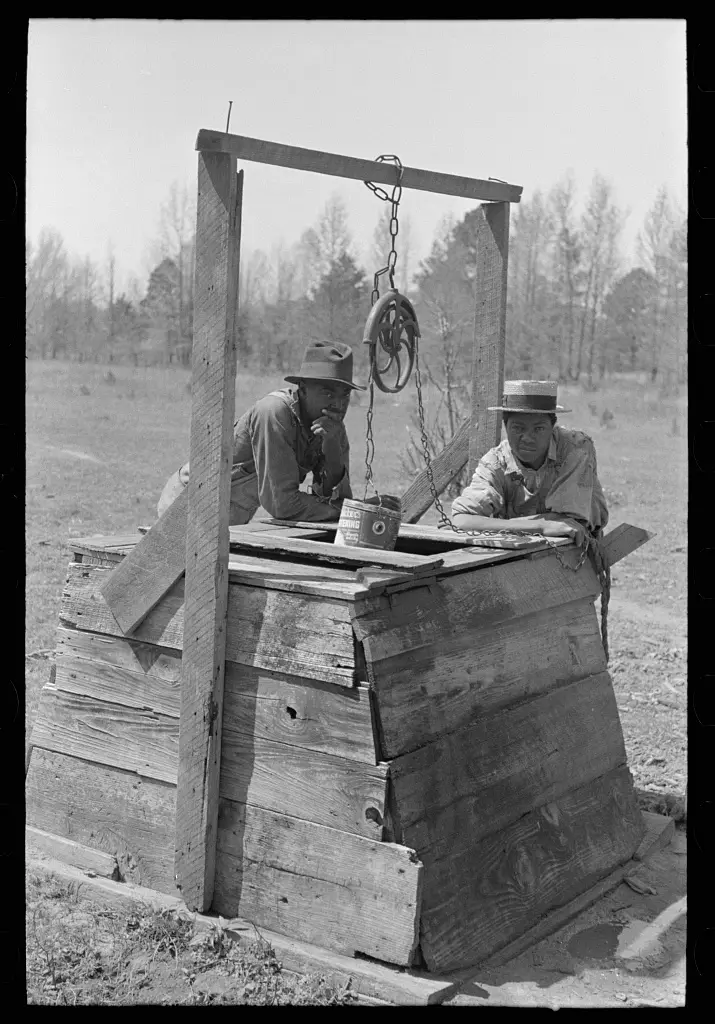
For generations, the loss of Black-owned land was treated as private misfortune: a family that sold, a farm that failed, a deed that went missing. The documents tell a different story. Across the country, descendants are now taking land claims to county boards, state legislatures and courtrooms — arguing that what was taken through violence, fraud, discriminatory lending and government action is a debt that can be traced, measured and returned.
How much land did Black Americans lose?
At their peak around 1910, Black farmers owned an estimated 15 to 16 million acres of land in the United States. By the late 20th century, that figure had fallen by roughly 90 percent. Historians and economists attribute the collapse to a combination of forces:
- Racial terror and forced displacement, from lynchings to the destruction of whole communities.
- Discrimination by the U.S. Department of Agriculture, which for decades denied or delayed loans and assistance to Black farmers — conduct the government later paid to settle.
- Heirs' property, land passed down without a will, which leaves families vulnerable to forced partition sales.
- Tax sales and eminent domain, including the seizure of land for parks, highways and "urban renewal."
This was not a market correction. It was a transfer of wealth, much of it carried out or enabled by public institutions.
Which land cases have succeeded?
Bruce's Beach, California. In 1924, the city of Manhattan Beach used eminent domain to take a beachfront resort owned by Willa and Charles Bruce, a Black couple who had been harassed by white neighbors. In 2022, after state legislation cleared the way, Los Angeles County returned the land to the Bruces' descendants. The family later sold it back to the county for about $20 million. It remains the clearest example of a government returning stolen land to the heirs of the people it was taken from.
Black farmers and the USDA. In Pigford v. Glickman (1999) and the later Pigford II settlement, the federal government agreed to pay more than $2 billion to Black farmers who proved discrimination in farm lending. Many claimants said payments came too late or were too small to recover the land already lost — a reminder that a settlement can acknowledge a debt without repaying it in full.
Which land claims have failed or stalled?
Tulsa, Oklahoma. In 2024, the Oklahoma Supreme Court dismissed a lawsuit brought by the last known survivors of the 1921 Tulsa Race Massacre, which destroyed the Greenwood district — homes, businesses and property worth millions. The ruling ended the survivors' public-nuisance claim without compensation, even as the U.S. Department of Justice opened a review of the massacre.
Hogg Hummock, Georgia. On Sapelo Island, one of the last intact Gullah Geechee communities descended from people enslaved on the island, residents have fought a 2023 county zoning change that they say will raise property taxes and drive families off ancestral land. The dispute has moved through local votes and the courts.
These cases show the limits of the current legal system: statutes of limitations, sovereign immunity and the passage of time often block claims even when the underlying facts are not in dispute.
How do descendants trace stolen land?
Land is one of the most documented forms of property in America. Families and researchers rebuild the chain of title using:
- County deed and tax records, which show transfers, liens and forced sales.
- Probate files, which reveal heirs' property and partition actions.
- Freedmen's Bureau and Freedman's Savings Bank records, which can tie a family to a place after emancipation.
- Federal census agricultural schedules, which list farm ownership and acreage.
Our guide to tracing stolen land walks through each record, and Trace the 1870 Line builds a personal research checklist.
Why land matters to reparations
Land is the original promise. In January 1865, General William T. Sherman's Special Field Order No. 15 set aside coastal land for freed families — the origin of "forty acres and a mule." Within months, President Andrew Johnson reversed it and returned the land to former enslavers. Every land case today is, in some sense, a claim on that broken promise.
That is why land return, land grants and protection of heirs' property belong in any serious reparations settlement alongside cash. Read more in The Land That Was Promised.
What to watch next
- Heirs' property reform. More states are adopting the Uniform Partition of Heirs Property Act, which gives families a chance to buy out relatives before a forced sale.
- Local land-return measures. Bruce's Beach has become a model that other cities and counties are studying.
- Federal action. Proposals in Congress, including H.R. 40, would create a commission to study remedies that could include land.
Frequently asked questions
How much land did Black Americans lose?
Black farmers owned an estimated 15 to 16 million acres around 1910. By the late 20th century that had fallen by roughly 90 percent, through racial terror, USDA lending discrimination, heirs' property sales, tax sales and eminent domain.
Has stolen Black land ever been returned?
Yes. In 2022 Los Angeles County returned Bruce's Beach, taken by eminent domain in 1924, to the descendants of Willa and Charles Bruce.
What is heirs' property?
Land passed down without a will, owned jointly by many relatives. It is vulnerable to forced partition sales, a major cause of Black land loss.
The bottom line
The loss of Black-owned land was not an accident of history. It was documented in deeds, tax rolls and court files — and documentation is what courts and legislatures act on. Bruce's Beach proved that stolen land can be returned to its heirs. Tulsa proved how often the system still refuses. The debt is recorded. The question is whether the government will honor it.
See the receipts · 5 primary sources
Civic action dispatch
Now act on it
A debt documented is not yet a debt collected. See it, prove it, force it.
- 01Federal + state bills
Step 01 · Monitor
Track the bills
Follow active reparations measures in Congress and the states.
Open tracker - 023,142 counties
Step 02 · Document
Verify the receipts
Find slave schedules, Freedmen's records and land deeds in your county.
Search your county - 03Scripts + caucuses
Step 03 · Mobilize
Organize your district
Call your lawmaker, reach your Black Caucus and start a local group.
Get the playbook
Priority action · 30 seconds
Call your state lawmaker today
Copy the script, then find your representative's number on the community page.
The Reparations Brief
Stay Informed.Stay Connected.Know Your History.
Get important reparations developments, historical research, legislative updates, and original reporting delivered to your inbox.
We use your email only to send The Reparations Brief. Unsubscribe anytime. See our Privacy Policy.