InvestigationsProperty Records
Tracing Stolen Land: What Property Records Reveal
How deeds, tax rolls and court files document Black land loss after emancipation.
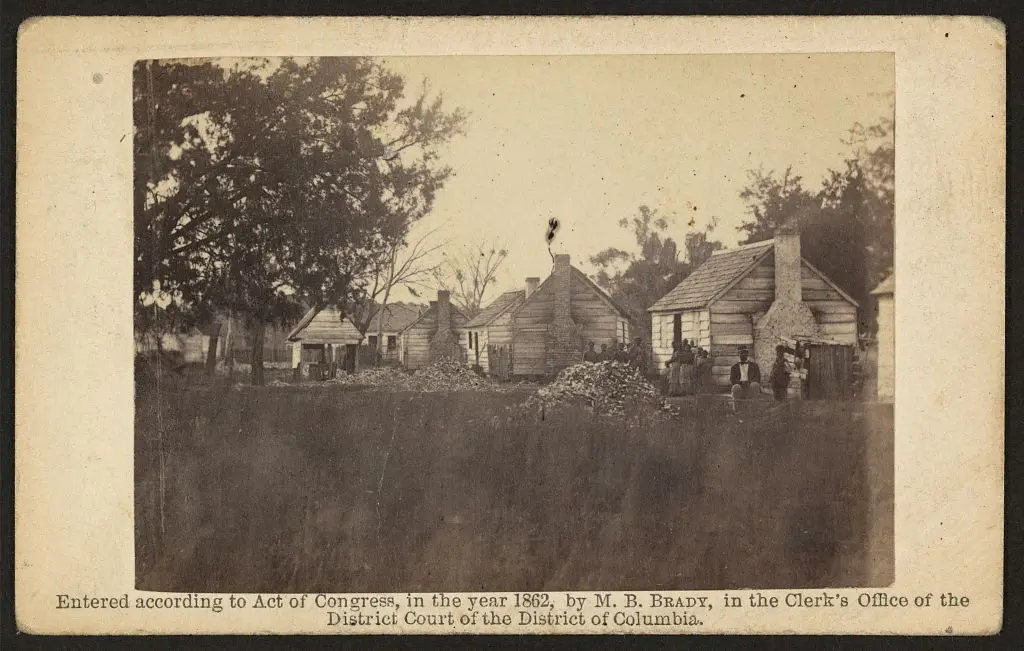
Property records can establish who owned land, how ownership changed and what legal process authorized a transfer. To determine whether land was stolen or discriminatorily taken, researchers must connect those records to evidence of coercion, fraud, unequal treatment or abusive public power.
For descendants of American slavery, this work can document a specific inheritance taken from our families. It also demands restraint: a missing deed is not proof of theft, and a recorded transfer is not proof that a transaction was fair.
Begin with the parcel, then follow the people
A family name is a starting point, not a property identification. Establish the county, legal description, approximate ownership dates and changes to parcel numbers or boundaries.
Deeds supply the backbone of a chain of title. Record the grantor, grantee, execution and recording dates, property description and references to earlier instruments. Search both sides of the transaction. The same surname in an index may refer to a different person or parcel.
Ask how the owner acquired title. Purchase, inheritance, court sale and government conveyance leave different trails. Working backward without that distinction can turn a complex history into an unsupported story.
Read the proceedings behind an involuntary transfer
In taxation, foreclosure, partition or condemnation cases, the deed may be the last document—not the most revealing. Proceedings can show the asserted debt, notice efforts, valuation, objections and distribution of proceeds.
A tax assessment does not establish title by itself. A sale price does not establish fair market value. A court order shows what a court authorized, not necessarily that everyone received equal treatment.
Did the owner contest the action? Does required notice appear in the file? Do correspondence or meeting records explain official intent? Keep allegations separate from judicial findings. Incomplete files should produce visible unanswered questions, not invented answers.
Probate can reveal an obscured inheritance
USDA describes heirs’ property as family land jointly owned by descendants with unresolved estate issues. Heirs may have use rights without clear or marketable title. USDA identifies vulnerability to partition sales and barriers to agricultural programs.
A deed in an ancestor’s name does not establish that the ancestor remained the sole owner after death. Wills, inventories, probate proceedings and court determinations may identify successors absent from a simple deed search.
Unresolved probate should not automatically be blamed on family negligence. Lack of legal assistance is a question to investigate—not a fact to invent. For a living family’s title problem, consult qualified legal assistance before signing a sale or surrendering an interest.
Federal archives add another trail
The Freedmen’s Bureau’s Reconstruction records include land administration alongside complaints, contracts and accounts of freedpeople’s lives. National Archives guides identify a Land Division and field-office collections.
These files can place a local transaction within federal administration. Distinguish occupation or permission to use land from ownership conveyed by a legally effective instrument. A family living on property is an important fact, but not necessarily proof of title.
Genealogy requires similar care. The 1860 slave schedules generally do not name enslaved people. Age and location can support a hypothesis but cannot establish identity alone. Researching Your Family History explains how to connect generations using several records.
Bruce’s Beach shows the difference a deed makes
On July 20, 2022, Los Angeles County returned Bruce’s Beach to the closest living legal heirs of Charles and Willa Bruce. The county’s official account identifies the earlier taking as racially motivated.
That result cannot be projected onto every disputed parcel. Properties have different owners, histories and available remedies. Nor does this case establish eligibility for a national slavery-descendant program.
It illustrates a clear distinction: acknowledgment tells the public what happened; restitution changes who owns the asset.
A parcel claim is not the entire national debt
Returning identified property can repair a specific loss. It cannot settle the entire federal reparations claim. Many descendants’ ancestors were denied ownership in the first place, leaving no family deed to recover.
Proof of a stolen parcel therefore should not become a universal entrance requirement for slavery-descendant restitution. Property research documents one category of injury, not all stolen labor.
Preserve citations, distinguish fact from inference and leave unresolved questions visible. The strongest account is one another researcher can check.
See the receipts
See the receipts · 3 primary sources
Civic action dispatch
Now act on it
A debt documented is not yet a debt collected. See it, prove it, force it.
- 01Federal + state bills
Step 01 · Monitor
Track the bills
Follow active reparations measures in Congress and the states.
Open tracker - 023,142 counties
Step 02 · Document
Verify the receipts
Find slave schedules, Freedmen's records and land deeds in your county.
Search your county - 03Scripts + caucuses
Step 03 · Mobilize
Organize your district
Call your lawmaker, reach your Black Caucus and start a local group.
Get the playbook
Priority action · 30 seconds
Call your state lawmaker today
Copy the script, then find your representative's number on the community page.
The Reparations Brief
Stay Informed.Stay Connected.Know Your History.
Get important reparations developments, historical research, legislative updates, and original reporting delivered to your inbox.
We use your email only to send The Reparations Brief. Unsubscribe anytime. See our Privacy Policy.