HistoryAfter Emancipation
From Emancipation to Exclusion: The Policies That Shaped Black Wealth
Discriminatory housing, lending, property ownership and economic policy after slavery.
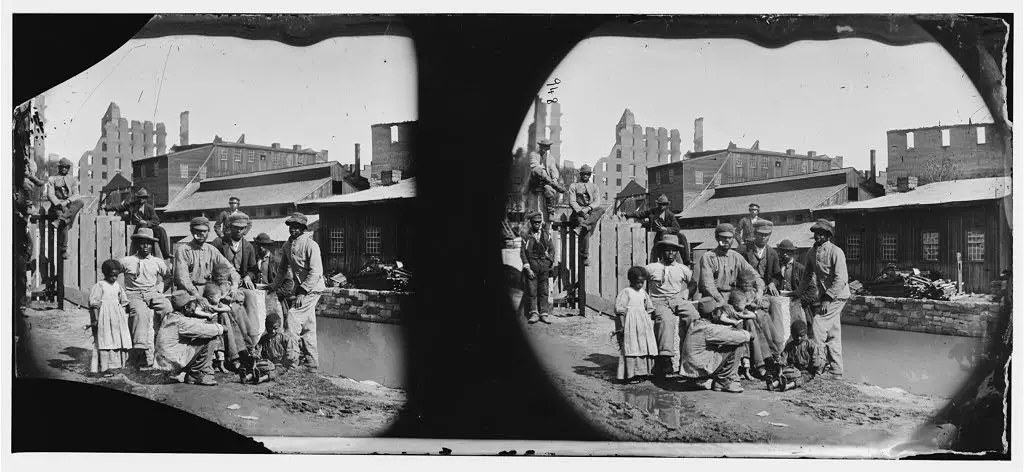
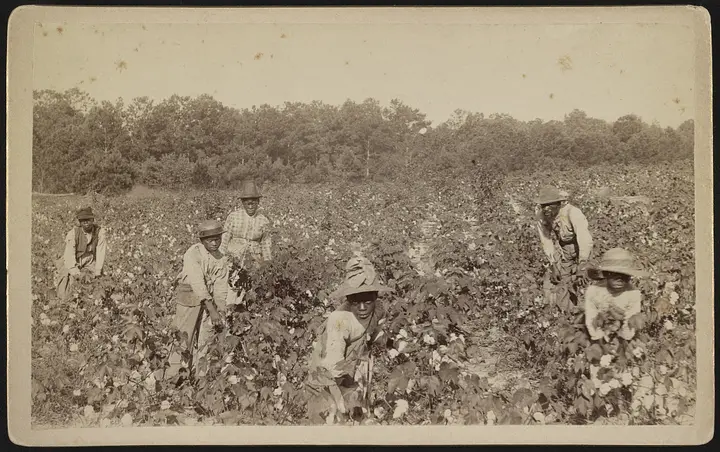
Emancipation ended legal slavery, but it did not give formerly enslaved families equal access to land, secure labor markets or government-supported wealth building. Subsequent policies constrained those opportunities through labor coercion, discriminatory housing rules and vulnerable property arrangements.
These injuries were not interchangeable and did not affect every family identically. Together, they explain why freedom alone could not restore the earnings and inheritance taken under American slavery.
Building a free life required more than a declaration
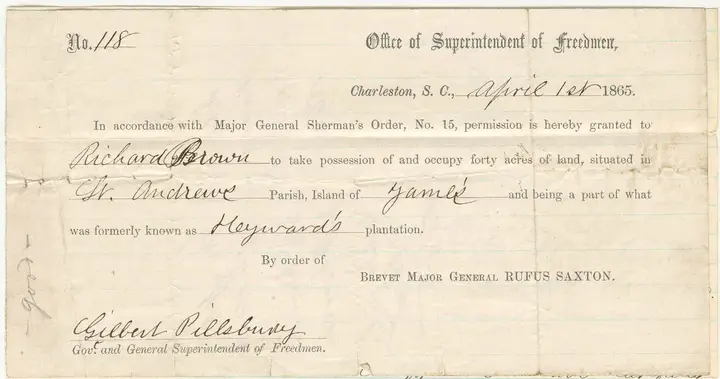
The Freedmen’s Bureau’s responsibilities show how much practical work emancipation required. Established in March 1865, it distributed relief, operated hospitals, assisted schools, supervised labor contracts and helped families legalize marriages and reunite after separation. It also managed abandoned and confiscated property.
These functions mattered. A family searching for relatives needed more than an abstract declaration of liberty. Assistance with survival and civil life, however, was not compensation for years of forced labor.
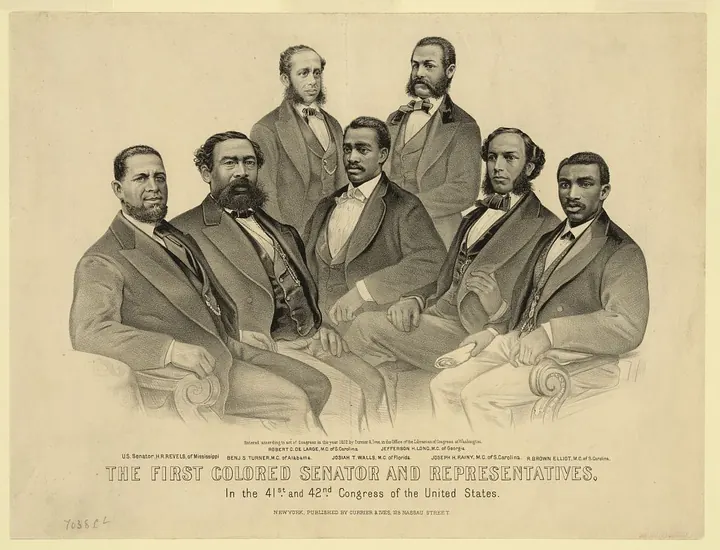
Reconstruction should not be presented as either complete federal abandonment or adequate repair. Intervention existed. Its existence does not establish that freedpeople received assets replacing what had been taken. Reconstruction: The First Attempt at Repair examines that unfinished work.
Criminal punishment became a route to coerced labor
The Thirteenth Amendment prohibited slavery and involuntary servitude while retaining an exception for punishment following conviction. The Library of Congress documents Black Codes and convict leasing after the Civil War, including arrests for minor offenses and the leasing of prisoners’ labor to private businesses. Governments collected leasing fees.
This was a different legal mechanism, not an identical continuation of every feature of chattel slavery. It exploited criminal law and incarceration to compel work.
Its economic significance lies in who controlled labor and received the proceeds. For those caught in the system, formal emancipation did not guarantee the ability to choose an employer, negotiate conditions or retain their work’s value. Public authority was implicated—not merely individual prejudice.
Federal mortgage policy helped draw the housing boundary
HUD preserves the FHA’s 1938 underwriting manual and explicitly identifies its references to racially discriminatory policies. The manual governed assessments of mortgages seeking federal insurance.
Government decisions about acceptable mortgage risk could influence which properties attracted financing and which households entered supported markets. Exclusion from favorable financing could affect more than a monthly payment.
A home might later provide collateral, rental income or an inheritance. A family denied access lost an opportunity, although the precise consequence requires evidence about the property, financing and period involved. Assigning every excluded household the same hypothetical gain would be inaccurate.
Acquiring land did not always secure the inheritance
Families who bought property could still encounter problems passing it on. USDA describes heirs’ property as jointly inherited land with unresolved estate issues, leaving heirs without clear or marketable title. It identifies barriers to program access and vulnerability to third-party partition sales.
Heirs’ property is not uniquely Black. Shared ownership does not prove theft. Nevertheless, title insecurity can threaten an inheritance a family already possesses.
An investigation must distinguish discriminatory dispossession, ordinary transactions and unresolved succession. Tracing Stolen Land explains how deeds and court files help separate these histories. Repair depends on understanding the actual injury rather than placing every loss under one label.
Protection and restitution do different jobs
A rule against future discrimination protects access going forward. Restitution addresses an injury already inflicted. Neither makes the other unnecessary.
For descendants of American slavery, the underlying reparations claim concerns stolen labor and denied inheritance. Post-emancipation injuries help explain how recovery was obstructed, but a slavery-descendant framework still needs its own eligibility rules. Broad racial statistics cannot substitute for lineage evidence.
Federal responsibility cannot disappear because discrimination operated through several levels of government. The FHA record supplies a direct federal policy connection; other claims require their own evidence.
A serious remedy identifies the injuries, explains their relationship and avoids double counting. It distinguishes compensation from a loan, public service or apology. Honoring what our families built under exclusion does not require pretending exclusion had no lasting cost—or that acknowledgment repays it.
See the receipts
See the receipts · 3 primary sources
Civic action dispatch
Now act on it
A debt documented is not yet a debt collected. See it, prove it, force it.
- 01Federal + state bills
Step 01 · Monitor
Track the bills
Follow active reparations measures in Congress and the states.
Open tracker - 023,142 counties
Step 02 · Document
Verify the receipts
Find slave schedules, Freedmen's records and land deeds in your county.
Search your county - 03Scripts + caucuses
Step 03 · Mobilize
Organize your district
Call your lawmaker, reach your Black Caucus and start a local group.
Get the playbook
Priority action · 30 seconds
Call your state lawmaker today
Copy the script, then find your representative's number on the community page.
The Reparations Brief
Stay Informed.Stay Connected.Know Your History.
Get important reparations developments, historical research, legislative updates, and original reporting delivered to your inbox.
We use your email only to send The Reparations Brief. Unsubscribe anytime. See our Privacy Policy.