HistorySlavery Era
The Economic Legacy of American Slavery
How generations of uncompensated labor built the nation's economy — and the barriers that followed emancipation.
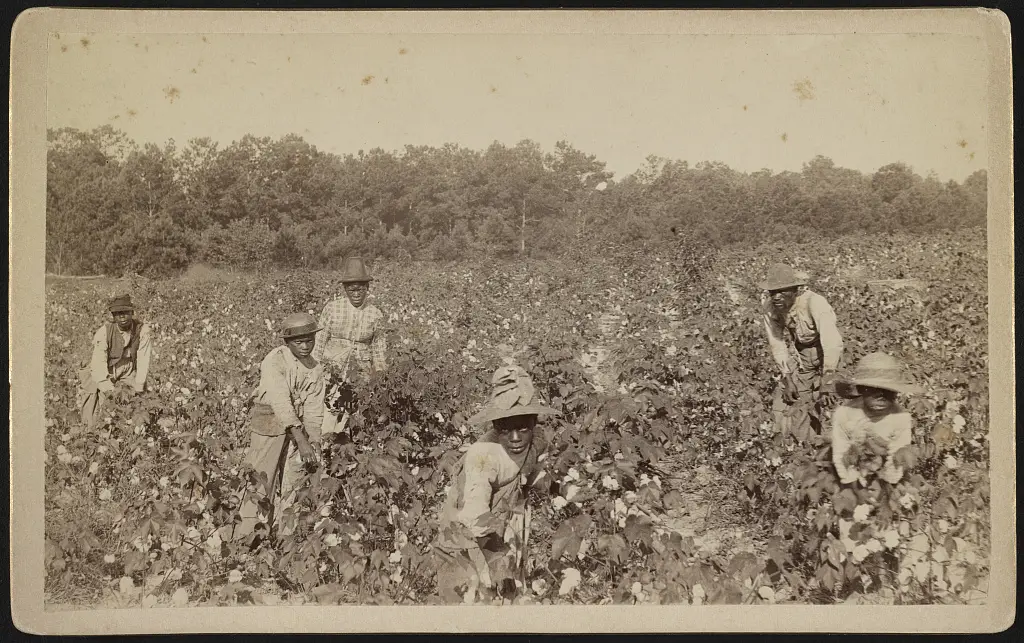
American slavery transferred value from people forced to work into assets controlled by others. Its economic legacy includes the inheritance enslaved families could not build from their own labor. Emancipation made slavery unlawful; it did not redistribute the wealth already accumulated through it.
For Foundational Black Americans, that distinction grounds a reparations claim for descendants of United States slavery. The issue is not simply that some families have less money today. A legally protected system denied our ancestors ownership of the value they produced.
The economy recorded production, not the worker’s entitlement
The 1860 agricultural census documented crops, acreage, farm values, livestock, machinery and the numbers of enslavers and enslaved people. These tables place agricultural production and slavery within the same official economic record. They allow researchers to examine particular places and industries rather than rely on sweeping estimates.
But cotton output is not a complete account of exploitation. It does not measure all domestic labor, skilled work or other activities performed under slavery. A plantation’s recorded value does not reveal what enslaved families might have earned, saved or passed down under freedom.
The records establish extraction. Calculating a present-day remedy requires additional choices about wages, profits, valuation dates and inheritance. Documentary facts and reconstructed estimates must remain distinguishable.
People were denied both earnings and ownership of themselves
Slavery’s injury went beyond low pay. Enslavers claimed people as property and controlled their labor through coercion. A worker could be sold while the proceeds belonged to someone else.
The District of Columbia Emancipation Act makes this regime visible in federal policy. In 1862, Congress authorized compensation of up to $300 per person freed to former enslavers loyal to the Union. It did not create an equivalent award for the people whose enslavement generated those claims.
The government’s valuation of a person is not a measure of that person’s worth. It shows whose financial interest the law recognized. Formerly enslaved people received freedom; qualifying former enslavers could receive money for losing control over them.
Inheritance carries yesterday’s allocation forward
Land produces rent or crops. Savings can finance education or a business. A home provides shelter before it passes to another generation. These ordinary mechanisms explain why ending an exploitative practice does not automatically reverse its economic effects.
They do not guarantee that every beneficiary remains wealthy. Families lose money, assets change hands and historical fortunes do not all survive. The claim does not need such an absolute assertion.
For descendants of American slavery, the inheritance argument concerns what could not enter the family estate: retained earnings, purchased land and other property derived from ancestors’ work. Reparations: Our Rightful Inheritance develops this argument without requiring recipients to prove poverty first.
Emancipation opened possibilities without settling the account
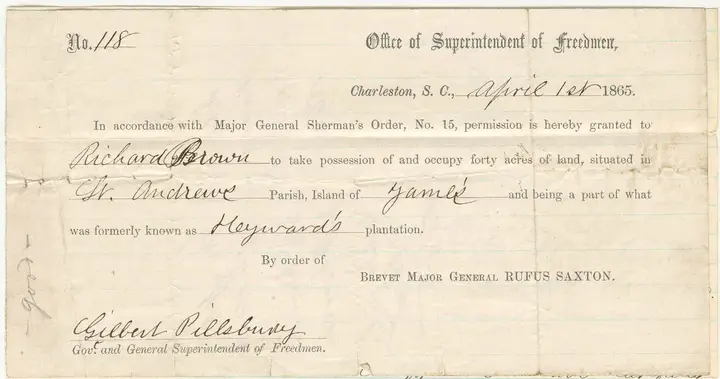
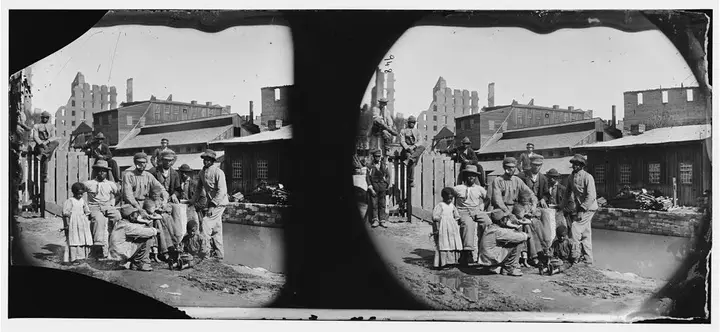
The Freedmen’s Bureau assisted schooling, family reunification, marriages and labor contracts. Its records document management of abandoned and confiscated property. Those interventions mattered. They were not a comprehensive distribution of compensatory assets to freed families.
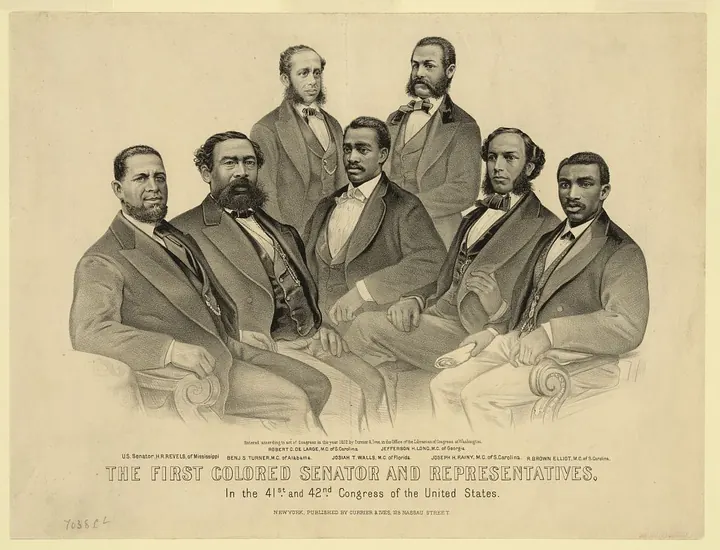
Our families built homes, farms, businesses and institutions afterward. Those achievements do not erase the original deprivation; they show what we created despite it.
Federal involvement in unequal asset building also continued. The Federal Housing Administration’s 1938 underwriting manual, preserved by HUD, contains racially discriminatory policies governing mortgage-insurance assessments. This is a separate documentary trail—not proof that every later wealth difference has one cause.
A wealth gap is evidence, not a complete invoice
Present-day racial wealth comparisons reveal disparities worth investigating. They do not identify every eligible slavery descendant or calculate every component of a reparations obligation. Broad racial categories are not genealogical records.
A remedy should state which injuries it addresses and how its calculations avoid counting the same loss twice. Precision strengthens the case. Our article on measuring the racial wealth gap explains the measurement problem.
An apology can acknowledge extraction. A study can improve the accounting. Neither supplies the property or capital identified as missing. Economic repair must be evaluated by what returns to the people holding the claim, not by how many institutions discuss their history.
See the receipts
See the receipts · 3 primary sources
Civic action dispatch
Now act on it
A debt documented is not yet a debt collected. See it, prove it, force it.
- 01Federal + state bills
Step 01 · Monitor
Track the bills
Follow active reparations measures in Congress and the states.
Open tracker - 023,142 counties
Step 02 · Document
Verify the receipts
Find slave schedules, Freedmen's records and land deeds in your county.
Search your county - 03Scripts + caucuses
Step 03 · Mobilize
Organize your district
Call your lawmaker, reach your Black Caucus and start a local group.
Get the playbook
Priority action · 30 seconds
Call your state lawmaker today
Copy the script, then find your representative's number on the community page.
The Reparations Brief
Stay Informed.Stay Connected.Know Your History.
Get important reparations developments, historical research, legislative updates, and original reporting delivered to your inbox.
We use your email only to send The Reparations Brief. Unsubscribe anytime. See our Privacy Policy.