InvestigationsFinancial Records
Who Profited From American Slavery?
The financial institutions, industries, property systems, and commercial networks connected to slavery—and the historical evidence documenting those relationships.
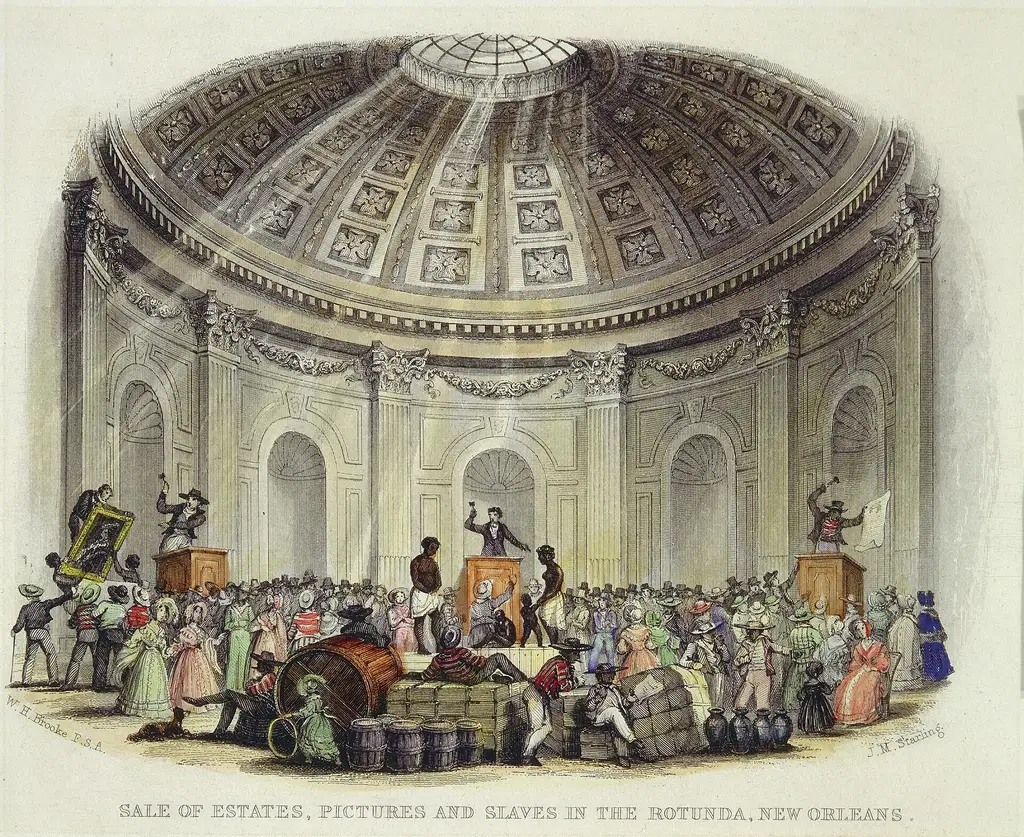
American slavery generated income far beyond the plantation.
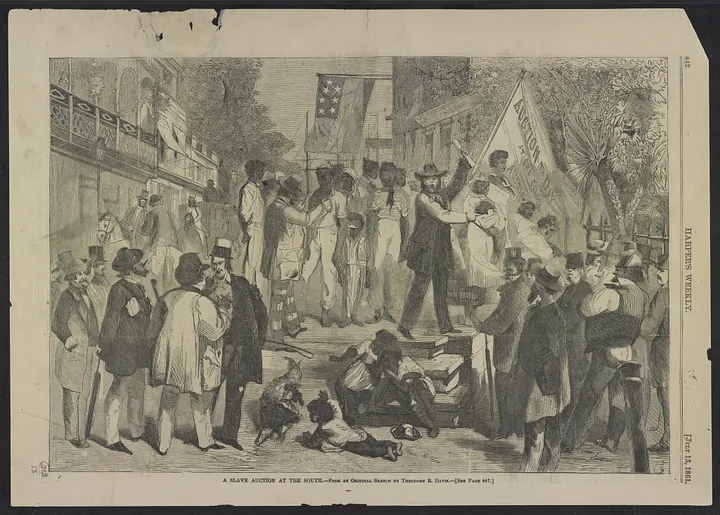
Enslavers extracted labor and sold the crops that labor produced. Traders sold human beings. Banks extended credit. Insurance companies collected premiums. Merchants transported commodities, and manufacturers turned slave-grown cotton into commercial goods.
These relationships connected Southern plantations to Northern businesses and overseas markets. For descendants of American slavery, following those transactions means tracing wealth extracted from our ancestors and denied to our families.
Explore the Evidence Understand the Case for Reparations
Slavery Was Also a Business System
Slavery depended on violence, racial domination, and the denial of human freedom. It also operated through contracts, loans, insurance policies, shipping records, and financial accounts.
Those documents reveal how businesses converted enslavement into revenue and treated human lives as financial interests. They help establish who participated, what services they provided, and how their transactions supported slavery.
The people recorded as property were people—not the assets their enslavers claimed them to be.
Plantation Owners and Slave Traders
Profit from forced labor and the sale of people
Enslavers benefited from the crops and other work produced by people they held in bondage. Traders and merchants pursued income through the purchase, transportation, and sale of enslaved Africans and their descendants.
Brown University’s historical investigation documents the involvement of members of the Brown family in slave-trading voyages, placing their activities within Rhode Island’s wider commercial economy. The report shows why the business of slavery cannot be understood solely through Southern plantations.
Behind those commercial transactions were captivity, family separation, and people struggling to preserve their lives and relationships.
Banks and Credit Networks
Financial services helped sustain slavery
Banks did more than hold money. Some predecessor institutions of present-day financial companies participated in slavery-related lending.
JPMorgan Chase’s 2007 proxy statement acknowledges that an investigation into two predecessor Louisiana banks led the firm to issue a public apology in 2005. The investigation followed Chicago’s requirement that companies seeking city business disclose historical investments in, or profits from, slavery.
This example illustrates why corporate history matters. An institution’s relationship to slavery may run through earlier banks acquired over generations.
Investigating that relationship requires identifying the historical institution, examining its transactions, and tracing the succession of ownership. A documented predecessor connection provides a starting point for accountability; calculating the benefit retained today requires further evidence.
Insurance Companies
Policies protected enslavers’ financial interests
Some insurers sold policies covering the injury or death of enslaved people. These arrangements protected the financial interests of enslavers while generating premium income for insurers.
California’s Department of Insurance maintains a Slavery Era Insurance Registry documenting historical policies and information submitted by insurance companies about their predecessors. Its report identifies records associated with companies including Aetna, New York Life, and United States Life.
The Schomburg Center for Research in Black Culture preserves slavery-era ledgers from Nautilus Insurance Company, a predecessor of New York Life. Its collection description documents policies issued between 1845 and 1848, along with records of premiums, insured amounts, and death claims.
These records expose a disturbing relationship: an enslaved person’s death could become a payable claim for someone asserting ownership over that person.
Textile Mills and Northern Industry
Slave-grown cotton connected plantations to factories
The economy of slavery extended into industrial communities where slavery was often described as a distant Southern institution.
The National Park Service documents how Lowell, Massachusetts, textile mills depended on cotton produced through enslaved labor. It also identifies the Lowell Manufacturing Company as a producer of inexpensive fabric sold to enslavers to clothe the people they held in bondage.
The commercial relationship ran in both directions: plantations supplied raw materials to manufacturers, and manufacturers sold goods back to plantations.
Economic dependence and opposition to slavery could also coexist. Recognizing that contradiction helps explain how participation in the slavery economy reached beyond those who openly defended it.
Shipping, Merchants, and Commercial Networks
Revenue moved through ports and trade routes
Slave-trading voyages required ships, financing, supplies, and buyers. Their organization connected merchants and investors to the transportation and sale of captive Africans.
Brown University’s report examines these networks through Rhode Island’s maritime commerce and surviving records of the Brown family’s activities. It demonstrates the importance of studying ports and trading businesses alongside plantations.
For each business, the question is specific: What did it transport, finance, insure, supply, or sell—and what do the records establish?
Property Systems
Human beings were recorded within systems of ownership
Slavery’s commercial machinery depended on laws and records that recognized enslavers’ claims over people.
The National Archives preserves material concerning purchases of freedom, freedom claims, trafficking, and the enforcement of slavery laws. Such records help reveal how government institutions administered and contested the system.
Property and financial records must therefore be read with care. They document the claims of people exercising power over others; they do not define the humanity of those subjected to that power.
What Counts as Evidence?
Different records answer different questions.
- Insurance policies and claims: Who purchased coverage, whose life was insured, and what payments were recorded.
- Bank records and corporate disclosures: Historical lending relationships and predecessor connections.
- Shipping and trading records: Participation in voyages, transportation, and commercial transactions.
- Manufacturing records: Dependence on slave-produced materials and sales to enslavers.
- Court and government records: How slavery-related claims and laws were administered.
These sources are strongest when examined together. A documented transaction may establish participation without establishing the full amount of profit or its eventual destination.
Historical Profit and Present-Day Responsibility
Related questions that require distinct evidence
Determining who benefited historically is essential to the reparations debate. Assessing present-day responsibility adds further questions:
- Does the institution still exist, or does it have a documented successor?
- What financial benefit can be established?
- How did assets or wealth move through later generations?
- What acknowledgment, disclosure, restitution, or compensation is appropriate?
Historical participation, institutional continuity, and legal liability require separate analysis. Careful distinctions strengthen the case for accountability by making clear what is documented and what remains to be investigated.
Follow the Money. Preserve the Human Story.
The financial history of slavery can be examined through surviving policies, ledgers, corporate disclosures, and public archives.
The purpose of that examination extends beyond identifying transactions. It is to understand how wealth was extracted from people denied freedom—and to inform the continuing debate over meaningful repair.
Reparations News examines the evidence, identifies documented beneficiaries, and asks what historical accountability should require today.
Read the Historical Records Explore Reparations Proposals Learn How to Help
See the receipts
- California Department of Insurance — Slavery Era Insurance Registry
Historical insurance disclosures, policy records, and information concerning insurers and their predecessors. - Schomburg Center for Research in Black Culture — Nautilus Insurance Company Slavery Era Ledgers
Archival description of policies, premiums, and claims involving enslaved people insured by a predecessor of New York Life. - JPMorgan Chase — 2007 Proxy Statement
See “Proposal 10 — Slavery apology report” and the board’s response acknowledging the investigation and apology concerning two predecessor Louisiana banks. - National Park Service — Southern Ties & Northern Gospels
Historical examination of Lowell’s manufacturing relationships with slavery, including textiles sold to enslavers. - Brown University — Slavery and Justice Report
Investigation of the university’s historical connections to slavery, the Brown family, and Rhode Island’s commercial networks. - National Archives — Records Relating to American Slavery and the International Slave Trade
Guide to federal records concerning slavery, trafficking, freedom claims, and the enforcement of slavery laws.
See the receipts · 3 primary sources
Civic action dispatch
Now act on it
A debt documented is not yet a debt collected. See it, prove it, force it.
- 01Federal + state bills
Step 01 · Monitor
Track the bills
Follow active reparations measures in Congress and the states.
Open tracker - 023,142 counties
Step 02 · Document
Verify the receipts
Find slave schedules, Freedmen's records and land deeds in your county.
Search your county - 03Scripts + caucuses
Step 03 · Mobilize
Organize your district
Call your lawmaker, reach your Black Caucus and start a local group.
Get the playbook
Priority action · 30 seconds
Call your state lawmaker today
Copy the script, then find your representative's number on the community page.
The Reparations Brief
Stay Informed.Stay Connected.Know Your History.
Get important reparations developments, historical research, legislative updates, and original reporting delivered to your inbox.
We use your email only to send The Reparations Brief. Unsubscribe anytime. See our Privacy Policy.