AnalysisReparations Explained
Reparations: Our Rightful Inheritance
The labor was our ancestors’. The inheritance should have been ours.
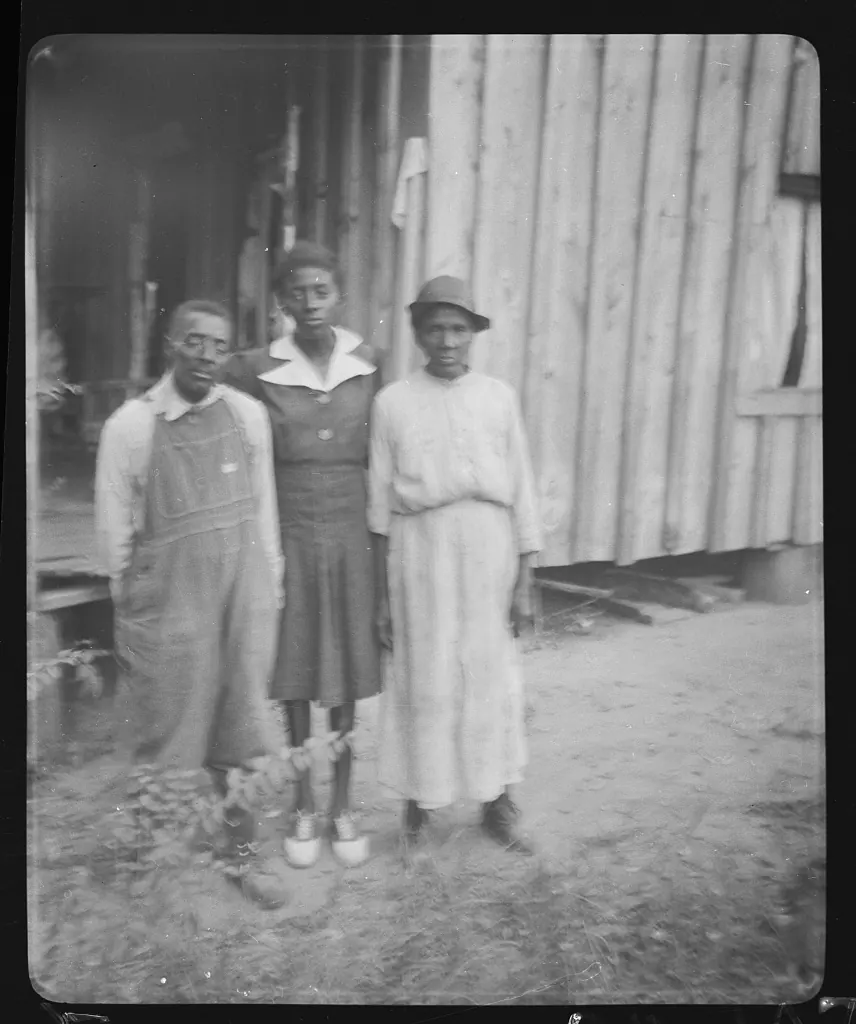
An inheritance does not require you to repeat your grandparents’ work. You do not have to build their business, purchase their home, or earn their savings a second time to receive what they leave behind.
Yet when descendants of American slavery call for reparations, one familiar objection appears:
“You weren’t enslaved. You didn’t do the work.”
That argument misunderstands inheritance.
The question is not whether descendants personally performed the labor. The question is what their families could have passed down if that labor had been paid, their freedom respected, and their property protected.
Reparations are our rightful inheritance interrupted—and a demand for repair.
Our ancestors worked. Others controlled the proceeds.
Slavery extracted labor while denying enslaved people control over their bodies, earnings, and family lives. The people producing wealth were treated as property themselves.
Their labor generated income and assets for enslavers and businesses connected to slavery. Those assets could support the owners’ families and survive beyond the people who originally accumulated them.
Enslaved families were denied the same opportunity to turn their work into independently controlled wages, savings, land, and security.
The inheritance argument begins with that injustice: labor created value, but the people compelled to perform it were prevented from keeping and passing down its proceeds.
“You didn’t earn it” is not how inheritance works
Imagine two families.
One family’s grandparents receive wages, purchase a home, and leave it to their children. The other family’s grandparents are forced to work without pay and prevented from accumulating comparable assets.
Decades later, the first family can use inherited wealth for education, a down payment, or starting a business. The second family must build those resources without that foundation.
This illustration is not a calculation of any particular family’s loss. It shows why looking only at today’s income misses what happened across generations.
In its analysis of the 2019 Survey of Consumer Finances, the Federal Reserve found that White families were more likely than Black families to receive inheritances and other family transfers, and generally received larger amounts when they did. federalreserve.gov
Nobody requires an heir to personally perform the work that created a legitimate inheritance. It makes little sense to invoke that requirement only when descendants ask about wealth their ancestors were prevented from accumulating.
Emancipation did not settle the account
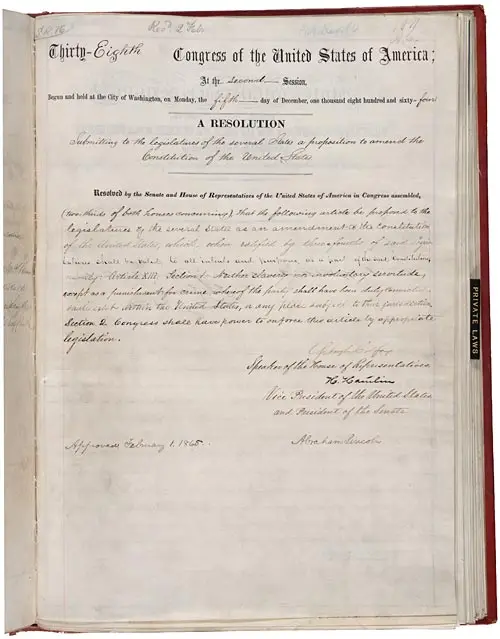
Freedom was essential. It did not itself compensate formerly enslaved people for generations of exploitation.
The land arrangements associated with General William T. Sherman’s Special Field Orders No. 15 offered some freedpeople a potential economic foundation. They did not establish a permanent nationwide land entitlement. In 1865, President Andrew Johnson’s restoration policies returned land to former owners, displacing thousands of freedpeople who had settled on it. National Archives
That reversal mattered beyond one harvest. Secure land could have supported homes, livelihoods, and assets for future generations. Its loss narrowed those possibilities.
Emancipation ended legal slavery. It did not deliver comprehensive economic repair.
The interruption continued after slavery
Black Americans continued building families, businesses, farms, institutions, and communities despite extraordinary barriers. Their history is one of achievement as well as dispossession.
But emancipation was followed by Jim Crow, racial violence, exclusion, and discriminatory housing and credit practices.
Redlining restricted access to mortgage credit in Black neighborhoods. That affected families’ opportunities to buy homes and build equity—assets that can support children and become an inheritance. federalreservehistory.org
These harms should be examined individually, with evidence identifying the responsible institutions and affected people. They also explain why a reparations argument cannot stop at slavery’s abolition.
The original deprivation was followed by further barriers to rebuilding what had been taken.
America recognized compensation—for enslavers
The District of Columbia Compensated Emancipation Act of 1862 ended slavery in the capital while providing qualifying enslavers loyal to the Union up to $300 for each person freed. It did not provide equivalent compensation to the people whose labor and freedom had been stolen. archives.gov
That history exposes a profound imbalance: public money could compensate someone for losing a claim to own another human being, while the human being’s years of exploitation remained uncompensated.
The inheritance argument asks whose losses America chose to recognize—and whose families were left to absorb the consequences.
Inheritance is a framework for repair
Calling reparations inheritance expresses a moral and economic argument. It does not mean an already established legal entitlement exists for every descendant, or that ordinary probate rules automatically resolve the claim.
A reparations program would still need to establish eligibility, responsibility, funding, and appropriate remedies.
Nor can anyone reconstruct every lost dollar or every life that might have unfolded differently. An unpaid wage, a confiscated property, and a denied mortgage involve different evidence and methods of assessing harm.
Those challenges require serious work. They do not make the losses disappear.
The purpose is to identify documented wrongdoing and design repair that reaches the people and communities bearing its consequences.
Repair should restore the ability to pass something down
If the harm includes blocked inheritance, the remedy should help restore lasting economic security.
That can include direct compensation, restitution of identifiable property where appropriate, and measures that protect families’ ability to retain assets. Education, housing, and business support may contribute, but ordinary public services should not simply be relabeled as payment for specific historical wrongs.
Meaningful repair also requires acknowledgment and safeguards against further discrimination and dispossession.
The goal is more than surviving the present. It is restoring the ability to leave future generations something stronger.
The work was done. The wealth was diverted.
As descendants of American slavery, we are asking what happened to the value produced by our ancestors.
We are asking why inherited advantage is accepted as normal while interrupted inheritance is dismissed as an unreasonable demand.
We are asking why the passage of time should erase responsibility when it has not erased the consequences.
Our ancestors did the work. Their families were denied the proceeds. Reparations are a demand to repair that broken chain of inheritance.
See the receipts · 3 primary sources
Civic action dispatch
Now act on it
A debt documented is not yet a debt collected. See it, prove it, force it.
- 01Federal + state bills
Step 01 · Monitor
Track the bills
Follow active reparations measures in Congress and the states.
Open tracker - 023,142 counties
Step 02 · Document
Verify the receipts
Find slave schedules, Freedmen's records and land deeds in your county.
Search your county - 03Scripts + caucuses
Step 03 · Mobilize
Organize your district
Call your lawmaker, reach your Black Caucus and start a local group.
Get the playbook
Priority action · 30 seconds
Call your state lawmaker today
Copy the script, then find your representative's number on the community page.
The Reparations Brief
Stay Informed.Stay Connected.Know Your History.
Get important reparations developments, historical research, legislative updates, and original reporting delivered to your inbox.
We use your email only to send The Reparations Brief. Unsubscribe anytime. See our Privacy Policy.