AnalysisLineage & Eligibility
Delineation and What It Means for Reparations
Why American slavery, lineage and government responsibility must define the debt owed to Foundational Black Americans—and how Caribbean claims differ.

Delineation means defining whose historical claim a reparations program is designed to repair. The United States owes a specific debt to descendants of people enslaved under American law—not an interchangeable payment to everyone classified as Black.
The question is simple enough to ask at a kitchen table: Whose ancestors did the work, who took the proceeds, and which government protected that arrangement?
Those questions belong at the beginning of a reparations proposal, not in a footnote after the money has been allocated. Our families’ history cannot be reduced to a racial checkbox. American slavery took labor, separated families and blocked the transfer of wealth. Ending that institution did not restore the inheritance it denied.
What does delineation mean in the reparations debate?
In this debate, delineation is the practice of distinguishing Black American lineages and their particular historical claims from other populations grouped together under broad racial labels. The term does not itself create a legal status, authorize a payment or establish a government eligibility rule.
Reparations News uses a Foundational Black American framework centered on descendants of people enslaved in the United States. The claim begins with American slavery and follows the government-backed barriers that obstructed those families after emancipation.
That is different from saying everyone who faces racism has the same reparations claim. A person can experience discrimination today without having an ancestor enslaved in America. Conversely, an eligible descendant’s income or birthplace today would not erase the historical relationship at the center of a lineage-based proposal.
Delineation identifies the injured lineage and the responsible institutions. It does not rank anyone’s humanity.
Why American slavery must be named specifically
“Descendants of slavery” can describe families connected to very different systems, jurisdictions and institutions. “Descendants of American slavery” identifies the historical relationship this site’s advocacy seeks to repair.
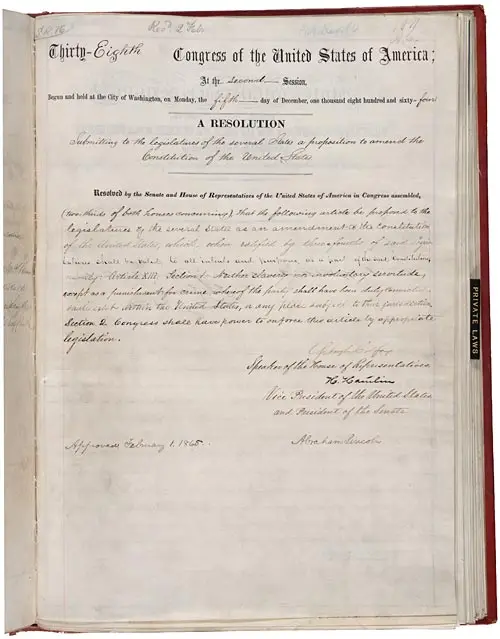
The United States protected slavery through law. The original Constitution included provisions concerning the international slave trade and the return of people held to service. Federal fugitive slave laws enforced enslavers’ claims. The Thirteenth Amendment abolished slavery, except as punishment for crime after conviction, but did not establish a comprehensive compensation program for the formerly enslaved. These are questions of American public responsibility, not merely private prejudice. See the National Archives’ Constitution transcript and Thirteenth Amendment.
For Foundational Black Americans, reparations are an unpaid debt and an interrupted inheritance. Our ancestors created value while being denied the right to retain it. Their descendants inherited the consequences, while wealth accumulated through slavery could remain in other families and institutions.
Calling that debt “inheritance” expresses the moral and economic case. It does not mean an existing probate entitlement automatically guarantees a government check. Lawmakers must still authorize a lawful remedy, establish eligibility and commit funding.
Read Reparations: Our Rightful Inheritance and Who Profited From American Slavery? for the economic and institutional context.
Caribbean reparations: Britain and the responsible European powers
For the injuries of British Caribbean slavery and colonial rule, the reparations demand belongs before Britain. The United States’ debt to descendants of American slavery should not become a substitute fund for Britain’s obligations to Caribbean communities.
Britain is not the only relevant former colonial power. Caribbean histories also involve France, the Netherlands, Spain and other responsible institutions. CARICOM’s official reparations framework directs demands to the United Kingdom, Europe and other enslaving nations; it does not present every Caribbean claim as exclusively British. Its priorities concern slavery, Indigenous genocide and extractive colonialism. CARICOM’s official manifesto overview explains that scope.
The practical principle is follow the responsibility. A British colonial injury calls for examining British responsibility. A French colonial injury calls for examining French responsibility. American slavery calls for examining American responsibility. Cooperation among movements need not make their debts or beneficiaries interchangeable.
Nor should “Caribbean” become an automatic exclusion based on birthplace. A Caribbean-born person may also descend from someone enslaved in the United States. A lineage-based policy should assess that connection under its actual rules, rather than treating nationality, accent or immigration history as proof of ancestry.
African participation in slave trading does not erase America’s debt to us
For Foundational Black Americans, this history begins with our ancestors—not with a claim that every Black population shares the same debt or the same inheritance. Our ancestors were human beings sold into a system that took their freedom, exploited their labor and denied their families the wealth they created. Their descendants have a specific claim against the American institutions that sustained that system.
Some African rulers, merchants and intermediaries participated in capturing or selling people into the Atlantic slave trade. That participation should be named plainly, not excused or hidden behind a story of universal solidarity. Other African communities resisted the trade or suffered its violence; the historical record identifies different actors and experiences, not one continent acting as a single people. The College of Charleston’s account of African participation and resistance documents those distinctions.
But pointing to an African seller does not clear the account of the European buyer or the American enslaver. America’s governments protected ownership of our ancestors, enforced their captivity and allowed the proceeds of their labor to enrich others. Another actor’s participation does not cancel America’s responsibility to our families.
Nor does shared African ancestry give modern African governments a claim to the restitution owed to descendants of American slavery. Our reparations are not foreign aid. They are not a continental development fund. They are repair for our families’ stolen labor and interrupted inheritance. African nations’ claims concerning their own documented injuries must stand on their own evidence; they do not replace or absorb our American claim.
The distinction is lineage, not a judgment about someone’s worth or a presumption of guilt based on birthplace. An African-born person with documented American slavery ancestry may also belong to the descendant community under a program’s rules. Race or nationality alone neither establishes that connection nor disproves it.
For us, the demand remains direct: identify the descendants of American slavery, hold the responsible institutions accountable and deliver restitution to the families owed the debt. Our ancestors’ inheritance must not disappear into a broad racial category that leaves their descendants waiting again.
How delineation should shape a reparations policy
An enforceable program needs more than a slogan. It needs answers the public can inspect:
| Policy question | What a serious proposal should explain |
|---|---|
| Whose claim is being repaired? | The eligible lineage and its relationship to American slavery. |
| What was taken? | Unpaid labor, denied inheritance and other documented harms within the program’s scope. |
| Who owes the remedy? | The responsible governments or institutions and their legal authority. |
| How is lineage verified? | Accessible records, reasonable alternative evidence and fair appeals. |
| What reaches descendants? | Direct compensation or restitution, funding, delivery dates and public accounting. |
Documentation can include census records, probate files, birth and death records, family records and Freedmen’s Bureau material. Slavery itself created gaps in those records; a fair process must account for them without abandoning verification. The National Archives’ African American genealogy resources offer a starting point—not a certification of eligibility.
Lineage-based design also does not automatically resolve constitutional questions. Courts can scrutinize ancestry classifications, governmental authority and the connection between a remedy and its stated injury. Our legal questions guide explains why careful drafting matters.
Solidarity is not the same as a shared account
Foundational Black Americans can recognize the suffering of other communities without surrendering the specificity of our own claim. Caribbean descendants can press their claims against the responsible former colonial powers. Other communities can pursue documented claims against institutions that harmed them.
None of that requires America’s unpaid slavery debt to be renamed a general diversity initiative, an antipoverty program or overseas development assistance. Those policies may have their own purposes. They are not automatically restitution to the families whose ancestors were enslaved here.
An apology is not a payment. A study is not a settlement. And an initiative that reaches a broad population without identifying the American slavery-descendant claim should not be presented as having discharged that debt.
Frequently asked questions
What is delineation in reparations?
Delineation separates the specific U.S. reparations claim of Foundational Black Americans — descendants of people enslaved in the United States — from the claims of other Black groups against other nations.
Do Caribbean and African immigrants qualify for U.S. reparations?
Under lineage-based proposals, eligibility depends on descent from people enslaved in the United States. Caribbean and African nations may hold separate claims against the European powers that enslaved or colonized them.
The bottom line: name the lineage, name the debt
Delineation matters because vague language can produce vague obligations. If a proposal cannot identify whose inheritance was interrupted, it cannot clearly explain whose inheritance it intends to restore.
For Reparations News, the demand is justice for descendants of American slavery: meaningful restitution tied to a specific history, a defined lineage and accountable institutions. Our ancestors’ work should not disappear into a category so broad that the people owed the debt become an afterthought.
Name American slavery. Identify the descendants. Establish responsibility. Deliver the repair.
Questions readers ask
Is delineation a law? No. Here it describes an editorial and policy approach. Eligibility depends on the text of an enacted program, not this article.
Does being Black automatically establish eligibility? Not under the lineage-based framework advocated here. Race alone does not document descent from someone enslaved in the United States.
Must all Caribbean claims go only to Britain? No. British Caribbean claims implicate Britain; other colonial histories implicate other responsible powers. These claims are distinct from America’s slavery-descendant debt.
Does African participation erase American responsibility? No. Responsibility for selling, transporting, enslaving and legally protecting slavery must be examined separately. One actor’s wrongdoing does not cancel another’s.
Can an immigrant also have American slavery ancestry? Yes. Birthplace alone does not establish or disprove lineage. Actual program rules and supporting evidence govern eligibility.
Explore the 5 Requirements · Research your family history · Track reparations legislation
Cover: Black American Heritage Flag, designed by Melvin Charles and Gleason T. Jackson in 1967. Image and design background: The Original Black American Heritage Flag. Editorial analysis; not legal advice or notice of an available compensation program.
See the receipts · 3 primary sources
Civic action dispatch
Now act on it
A debt documented is not yet a debt collected. See it, prove it, force it.
- 01Federal + state bills
Step 01 · Monitor
Track the bills
Follow active reparations measures in Congress and the states.
Open tracker - 023,142 counties
Step 02 · Document
Verify the receipts
Find slave schedules, Freedmen's records and land deeds in your county.
Search your county - 03Scripts + caucuses
Step 03 · Mobilize
Organize your district
Call your lawmaker, reach your Black Caucus and start a local group.
Get the playbook
Priority action · 30 seconds
Call your state lawmaker today
Copy the script, then find your representative's number on the community page.
The Reparations Brief
Stay Informed.Stay Connected.Know Your History.
Get important reparations developments, historical research, legislative updates, and original reporting delivered to your inbox.
We use your email only to send The Reparations Brief. Unsubscribe anytime. See our Privacy Policy.