AnalysisHistorical Analysis
The Unfinished Business of American Emancipation
Slavery ended. The question of repair remains.
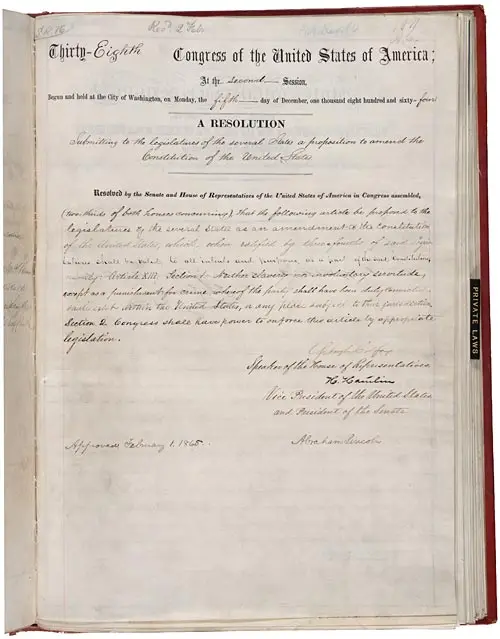
More than 160 years after slavery’s abolition, the question of reparations remains unresolved at the federal level.
In 1865, the ratification of the Thirteenth Amendment formally abolished slavery in the United States, except as punishment for a crime following conviction. It marked a historic victory for freedom—but did not establish comprehensive compensation for the people whose labor, lives, and families had been exploited through generations of enslavement.
The decades that followed brought Black Codes, racial violence, Jim Crow segregation, restrictions on voting, and discriminatory housing practices. Freedom opened new possibilities, while laws and institutions continued to obstruct Black Americans’ ability to exercise their rights and build lasting economic security.
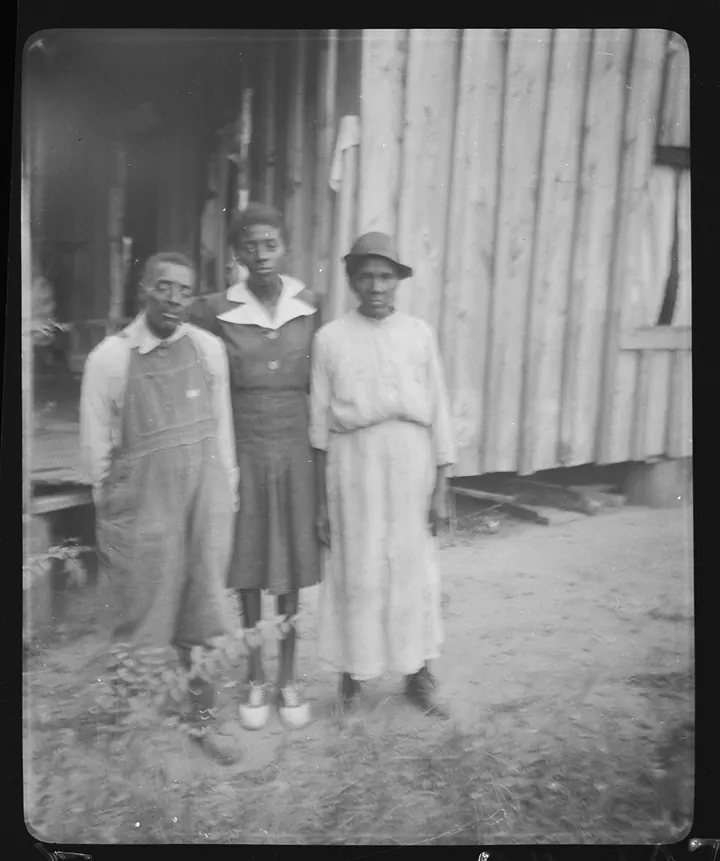
Today, descendants of American slavery, lawmakers, researchers, and organizations continue to examine what historical accountability and meaningful repair could look like.
Reparations News follows that unfinished business—connecting the historical record to the policy decisions being debated today.
Follow the Reparations Debate Explore the Historical Record
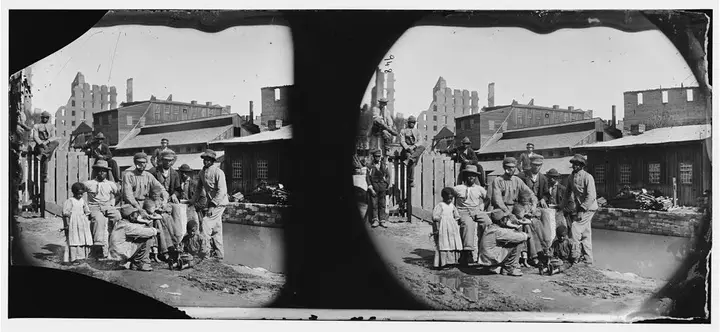 Freedpeople by the canal in Richmond, Virginia, 1865. Civil War Photograph Collection / Library of Congress. The catalog dates the record April 1865; a related stereo caption says June 9. Original stereograph retained.Library of Congress: no known restrictions on publication. This advisory is not a guarantee of all rights. Resized and converted to WebP; original framing retained.
What Emancipation Changed—and What It Left Unresolved
Legal freedom was a beginning
Abolition changed the legal status of millions of people. Formerly enslaved families pursued education, reunited with relatives, established churches, negotiated wages, and sought land and independence.
The Freedmen’s Bureau supported parts of that transition, helping establish schools, locate family members, legalize marriages, and assist with land purchases. These efforts mattered, but they did not become a comprehensive national program compensating formerly enslaved people for generations of exploitation.
Emancipation left fundamental questions unanswered:
- How would people begin independent lives after generations of unpaid labor?
- What resources would support families separated by sale and forced migration?
- Who would protect their freedom, property, and political participation?
- What responsibility would the government assume for the system it had upheld?
The distinction between ending an injustice and repairing its consequences sits at the center of the reparations debate.
Freedom Under Restriction
The barriers continued after 1865
The end of slavery did not bring an end to government-backed racial discrimination.
Southern states enacted Black Codes that restricted the rights of freedpeople. Sharecropping arrangements often trapped Black farmers in dependence on landowners, while white supremacist violence and discriminatory laws undermined political participation.
In later decades, segregation, housing discrimination, and restrictive covenants constrained where Black families could live and pursue opportunity. These barriers extended the struggle for freedom into the institutions governing everyday life.
For reparations advocates, this history expands the question beyond slavery itself: What repair is owed for the policies and practices that continued to inflict harm after emancipation?
Answering that question requires identifying specific actions, documenting their consequences, and examining which institutions bear responsibility.
Why Government Responsibility Matters
A public system raises public questions
Slavery operated within a legal order that recognized and enforced the ownership of human beings. After abolition, government decisions continued to shape citizenship, voting rights, labor, housing, and access to opportunity.
Reparations proposals therefore raise questions of institutional responsibility:
Which harms should be addressed?
Enslavement, subsequent discrimination, or both?
Who bears responsibility?
The federal government, state and local governments, private institutions, or some combination?
Who should qualify?
Descendants of people enslaved in the United States, people harmed by particular discriminatory policies, or other populations defined by a proposal?
What would constitute meaningful repair?
Financial compensation, restitution, services, institutional changes, or a coordinated program?
These choices determine whom a policy reaches, what it remedies, and whether its results can be evaluated.
What Repair Could Look Like
From acknowledgment to material remedies
Reparations proposals differ in scope and design. Approaches under debate include:
- Direct compensation: Payments intended to address documented losses and historical injustice.
- Land and property restitution: Returning property where possible or compensating for wrongful dispossession.
- Education, housing, and health measures: Programs designed to remedy identified harms in particular areas.
- Institutional reforms: Changes intended to prevent the continuation or recurrence of discriminatory practices.
- Formal acknowledgment: Apologies, public records, memorials, and historical education.
- Commissions and research: Investigations that establish findings and recommend remedies.
Each approach raises practical questions about eligibility, funding, administration, and accountability.
A study proposal and an official apology are not compensation programs. Even a funded program must be judged by payments delivered to the descendants owed restitution.
Explore Reparations Proposals Read the Five Requirements of Reparations
The Federal Debate
What a commission would—and would not—do
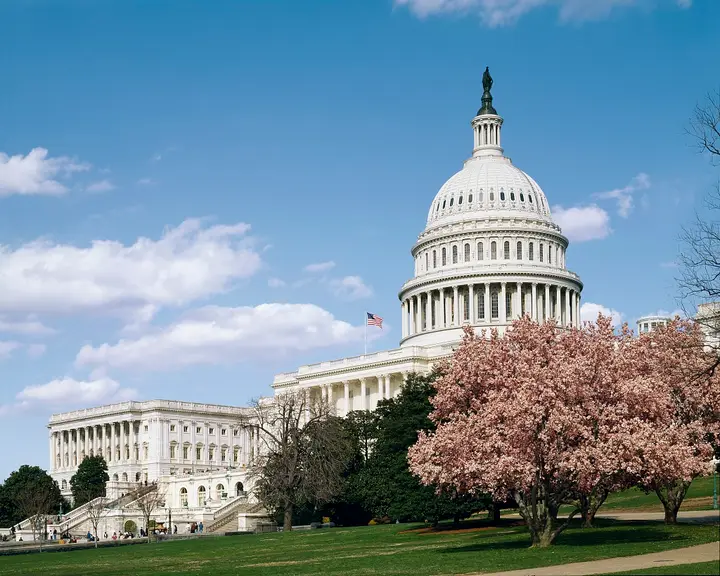
H.R. 40, the Commission to Study and Develop Reparation Proposals for African Americans Act, proposes a federal commission to examine slavery, subsequent racial and economic discrimination, and their effects on living African Americans. Its purpose is to develop recommendations for Congress concerning appropriate remedies.
A study commission would not itself distribute compensation. Recommendations would still require further decisions about legislation, funding, eligibility, and implementation.
That distinction matters when assessing progress.
A bill’s introduction is a proposal. A committee action is a legislative step. Enactment creates legal authority. Funding and implementation determine what people actually receive.
Reparations News examines both the promises in a proposal and the steps necessary to put them into practice.
The Questions That Deserve Serious Answers
Accountability requires a workable policy
A meaningful national discussion must address difficult questions directly:
- What evidence establishes the harms a program intends to repair?
- How should eligibility be defined and documented?
- How should losses and compensation be calculated?
- What happens when family records are incomplete or inaccessible?
- How would a program be funded and administered?
- What legal challenges could affect its design?
- How would recipients appeal an eligibility decision?
- How would the public measure whether the program achieved its purpose?
We examine competing answers, the evidence behind them, and the consequences of different policy choices.
How Reparations News Covers the Story
Documents. Decisions. Consequences.
Reparations News examines the debate through original documents, legislative reporting, historical research, and analysis of competing policy proposals.
Our coverage focuses on:
The historical record
What laws, government records, testimony, and institutional archives reveal.
The policy details
Who qualifies, what is proposed, how it would be funded, and who would administer it.
The legislative process
Where measures stand and what must happen next.
The people affected
How descendants, communities, and families understand the harms and proposed remedies.
The results
Whether commitments lead to funded programs, delivered benefits, and measurable repair.
We distinguish established findings from disputed interpretations, and proposed remedies from implemented programs.
An Unfinished Chapter of American History
Emancipation was a profound achievement, won through resistance, sacrifice, organizing, and war.
It also left a question that continues to shape American public life:
What does a nation owe when ending a system of injustice does not repair the damage that system caused?
Reparations News exists to examine that question—and to follow the decisions that will determine its answer.
Read the Latest Coverage Explore Ways to Take Action Get Reparations News Updates
See the receipts · 3 primary sources
Civic action dispatch
Now act on it
A debt documented is not yet a debt collected. See it, prove it, force it.
- 01Federal + state bills
Step 01 · Monitor
Track the bills
Follow active reparations measures in Congress and the states.
Open tracker - 023,142 counties
Step 02 · Document
Verify the receipts
Find slave schedules, Freedmen's records and land deeds in your county.
Search your county - 03Scripts + caucuses
Step 03 · Mobilize
Organize your district
Call your lawmaker, reach your Black Caucus and start a local group.
Get the playbook
Priority action · 30 seconds
Call your state lawmaker today
Copy the script, then find your representative's number on the community page.
The Reparations Brief
Stay Informed.Stay Connected.Know Your History.
Get important reparations developments, historical research, legislative updates, and original reporting delivered to your inbox.
We use your email only to send The Reparations Brief. Unsubscribe anytime. See our Privacy Policy.