HistoryReconstruction
Reconstruction: The First Attempt at Repair
What Reconstruction promised freed people, what it delivered, and why it ended.
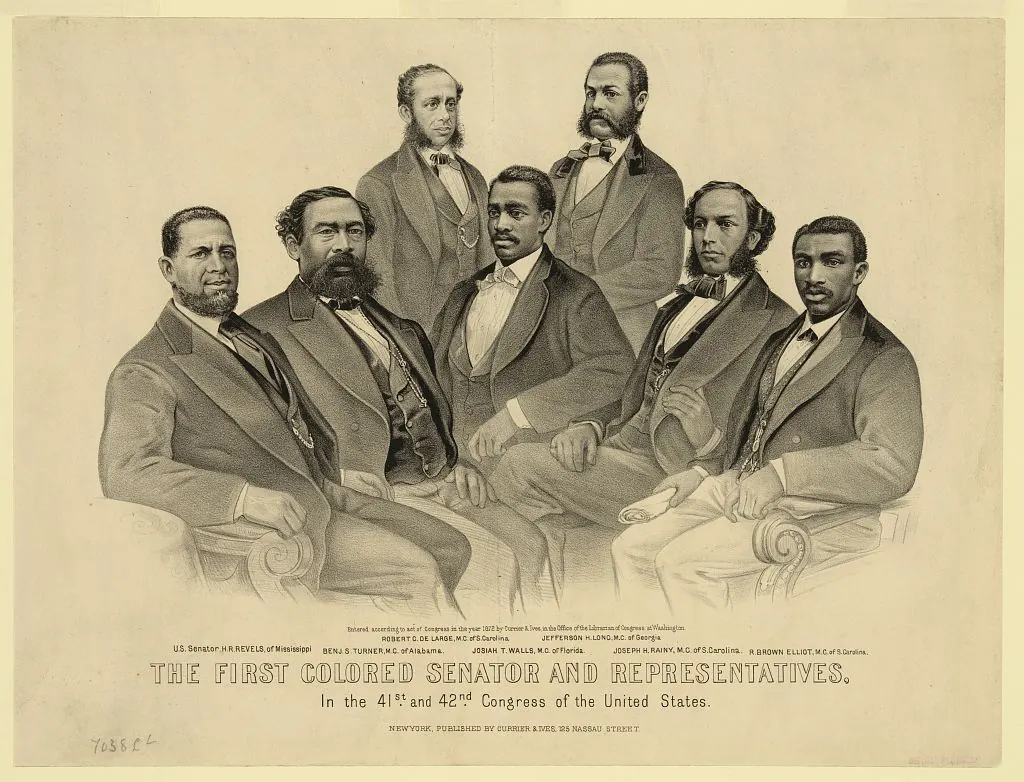
Reconstruction attempted to turn emancipation into citizenship, political participation and practical independence. It delivered constitutional change and federal assistance, but not a comprehensive settlement for labor and property taken through slavery. “An attempt at repair” is an interpretation of that history—not the name of a unified federal reparations program.
Freedom changed legal status. It did not restore the inheritance slavery had prevented families from accumulating.
Freedom created an immediate federal responsibility
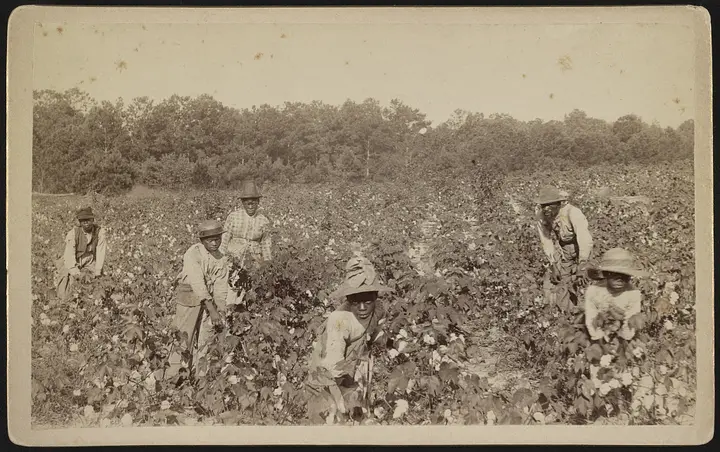
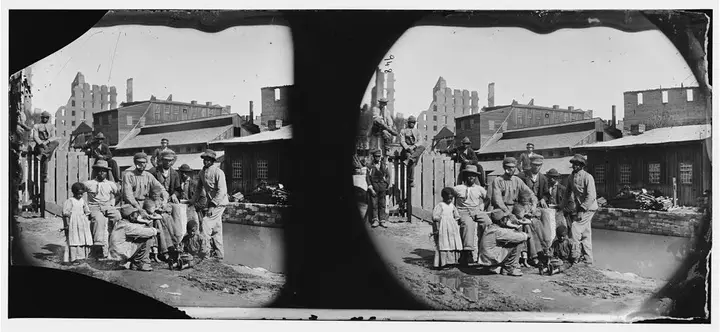
At the Civil War’s end, formerly enslaved people faced urgent questions: where to live, how to earn wages, how to reunite families and how to exercise rights hostile local authorities might refuse to recognize.
Congress established the Bureau of Refugees, Freedmen, and Abandoned Lands on March 3, 1865. The Freedmen’s Bureau operated within the War Department through officials across former Confederate states, border states and the District of Columbia.
Its records document food and clothing distribution, hospitals, refugee camps, labor contracts and complaints. The bureau helped legalize marriages formed during slavery and assisted family reunification. Making freedom usable required institutions, not simply a declaration.
Assistance delivered something real—and left more unresolved
The bureau helped benevolent societies establish schools and assisted Black servicemen and their families with pay, bounty and pension claims. These efforts should not be dismissed because they fell short of restitution. Education and access to earned military benefits could change lives.
But emergency rations did not compensate generations of coerced labor. A supervised labor contract did not confer ownership of the land being worked. Assistance and reparations are not synonyms.
The agency’s life was limited. It existed until 1872, while the National Archives identifies June 1865 through December 1868 as the period of most activity. A temporary agency confronted consequences of a deeply entrenched national institution.
Rights entered the Constitution
The Thirteenth Amendment abolished slavery, with an exception for punishment following conviction. The Fourteenth established birthright citizenship and protections including due process and equal protection. The Fifteenth prohibited denying voting rights because of race, color or previous condition of servitude.
These changes altered the constitutional order and supplied foundations for later struggles over federal enforcement. Congress also enacted Reconstruction legislation creating military districts across most former Confederate states and conditions for readmission to representation.
Constitutional recognition was not economic security. Someone could possess citizenship while lacking land, savings or effective protection against coercion. The Unfinished Business of American Emancipation examines this divide.
Land and compensation were not settled
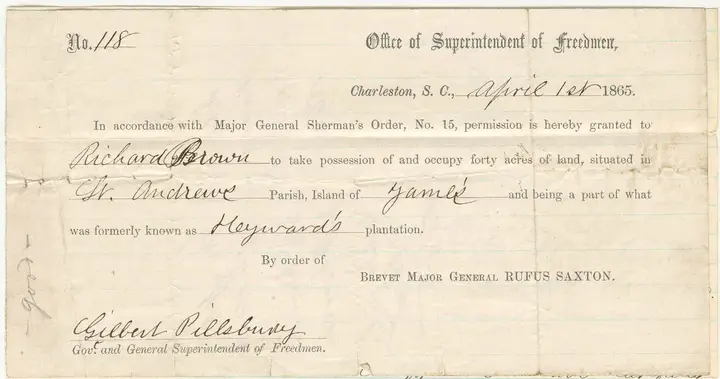
Land offered a home, productive property and something parents could leave their children. Yet the United States did not create a comprehensive land-compensation settlement for formerly enslaved people.
The National Archives’ account of the later ex-slave pension movement describes the absence of federal land compensation and the dependency many freedpeople faced. Organizing for pensions shows that material demands did not begin with contemporary politics. Formerly enslaved people and advocates sought compensation while survivors were alive.
The history of land promises and reversals deserves its own treatment. The Land That Was Promised examines it. The narrower conclusion is that Reconstruction did not settle slavery’s economic debt.
Reconstruction was undermined, not simply completed
Reconstruction is conventionally dated from 1865 to 1877. Primary-source collections document violent resistance to interracial democracy and disputes over enforcement.
The end of federal military intervention in Southern political affairs in 1877 is an important marker—not proof that every Black political achievement or Reconstruction institution vanished that year. Disfranchisement and segregation developed through subsequent violence, laws and administration.
A completed-transition narrative misses the central struggle: rights written into law could be weakened when governments failed to protect them.
Why the inheritance question remains
From an FBA perspective, Reconstruction reveals federal capacity and federal failure. Washington could establish agencies, rewrite constitutional rules and intervene in state affairs. It did not provide comprehensive restitution to those whose labor had been taken.
Federal responsibility for that unpaid debt remains today, although Reconstruction legislation does not itself create a present payment entitlement. We inherited the consequences without receiving the assets our ancestors were denied. Its achievements were real; its material settlement remained unfinished.
See the receipts
See the receipts · 3 primary sources
Civic action dispatch
Now act on it
A debt documented is not yet a debt collected. See it, prove it, force it.
- 01Federal + state bills
Step 01 · Monitor
Track the bills
Follow active reparations measures in Congress and the states.
Open tracker - 023,142 counties
Step 02 · Document
Verify the receipts
Find slave schedules, Freedmen's records and land deeds in your county.
Search your county - 03Scripts + caucuses
Step 03 · Mobilize
Organize your district
Call your lawmaker, reach your Black Caucus and start a local group.
Get the playbook
Priority action · 30 seconds
Call your state lawmaker today
Copy the script, then find your representative's number on the community page.
The Reparations Brief
Stay Informed.Stay Connected.Know Your History.
Get important reparations developments, historical research, legislative updates, and original reporting delivered to your inbox.
We use your email only to send The Reparations Brief. Unsubscribe anytime. See our Privacy Policy.