HistoryReconstruction
The Land That Was Promised: What Happened to Forty Acres and a Mule?
How a historic promise of landownership to formerly enslaved Black Americans was reversed—and why its legacy remains central to the fight for reparations today.
A Promise of Freedom, Land, and a New Beginning
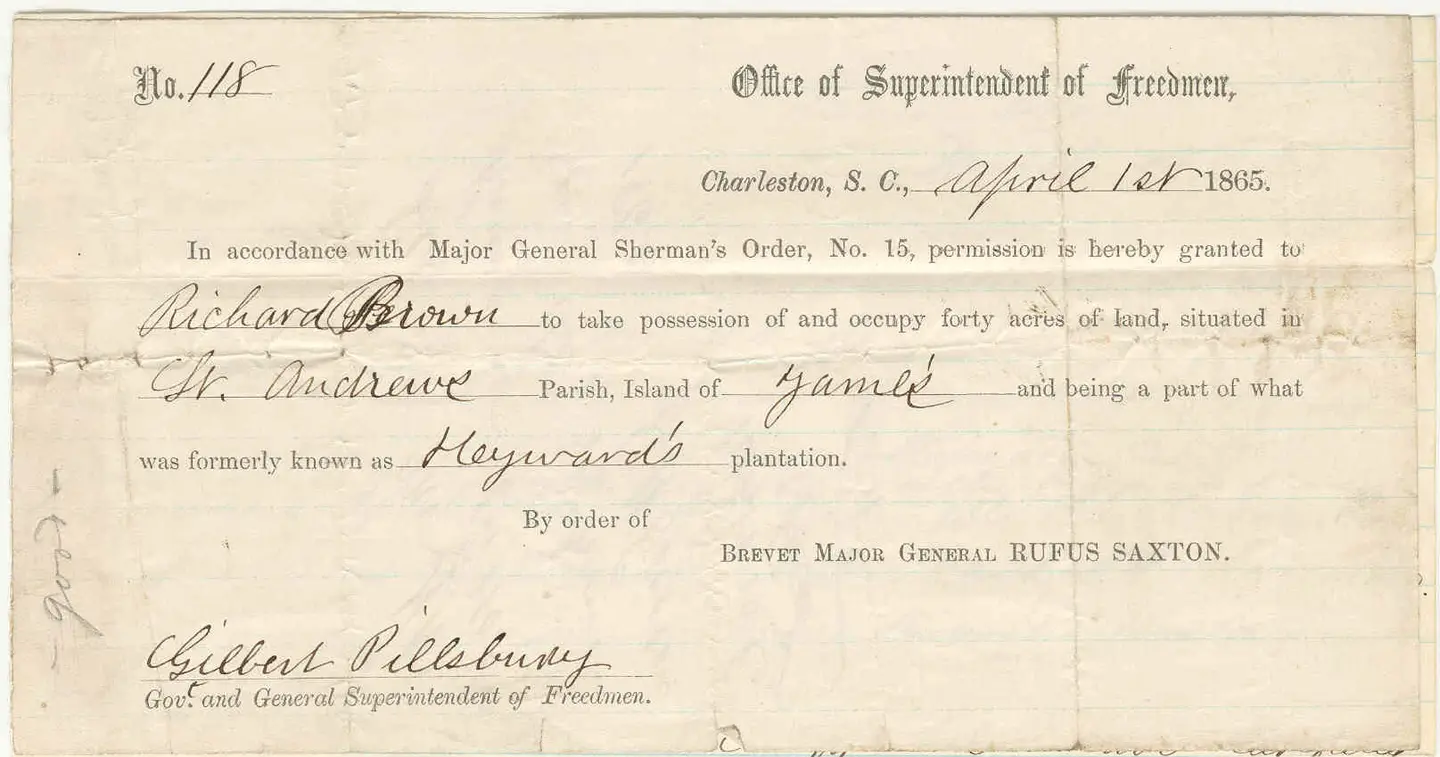
In January 1865, as the Civil War approached its conclusion, the United States government took a historic step toward addressing the economic devastation caused by slavery. Union General William Tecumseh Sherman issued Special Field Orders No. 15, setting aside approximately 400,000 acres of confiscated and abandoned coastal land for the settlement of formerly enslaved Black families.
The order envisioned land divided into parcels of no more than 40 acres per family.
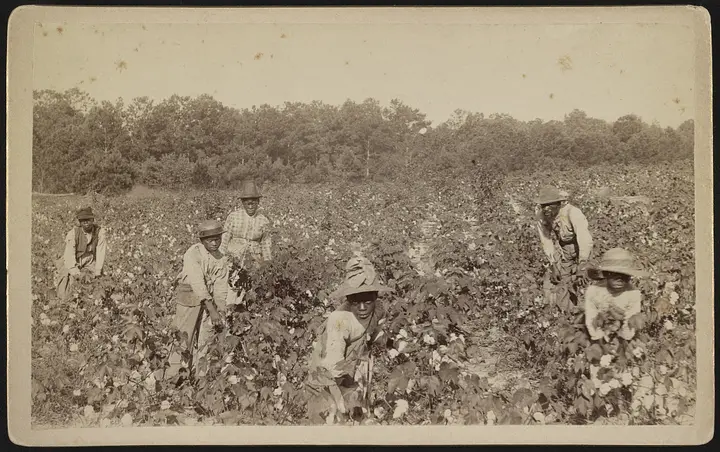
For generations, enslaved Black Americans had worked the land, cultivated crops, built agricultural wealth, and enriched the American economy without receiving wages, property rights, or the opportunity to accumulate wealth for their descendants.
Now, for the first time, thousands of newly freed families had a real opportunity to establish economic independence through landownership.
The promise would become known throughout American history as "Forty Acres and a Mule."
But that promise would not last.
Within months, federal policy shifted. Much of the land that had been allocated to formerly enslaved families was returned to former Confederate landowners.
What could have become one of the most significant transfers of economic opportunity in American history was largely dismantled.
More than 160 years later, the consequences of that reversal remain central to the national conversation about reparations, generational wealth, and the economic inheritance denied to descendants of American slavery.
The Origins of Forty Acres and a Mule
On January 12, 1865, General Sherman and Secretary of War Edwin Stanton met in Savannah, Georgia, with 20 Black religious leaders to discuss what formerly enslaved people needed to establish independent lives after emancipation.
Among the leaders was Reverend Garrison Frazier, who had been enslaved for much of his life.
When asked what freedom would require, Frazier explained that land was essential because it would allow formerly enslaved people to support themselves through their own labor.
His response reflected a fundamental understanding of economic freedom: Emancipation without access to economic resources could leave formerly enslaved people dependent on the very system that had exploited them.
Four days later, on January 16, Sherman issued Special Field Orders No. 15.
The order reserved coastal lands extending from the Charleston area southward through Georgia, including the Sea Islands and abandoned rice fields along rivers, for Black settlement.
Families could receive possessory rights to parcels of up to 40 acres.
The order did not establish a permanent nationwide land-grant program or guarantee full legal ownership. Nevertheless, it represented an extraordinary federal intervention intended to help formerly enslaved people establish independent communities.
The phrase "and a mule" developed from the subsequent provision of surplus Army mules to some settlers. The original order itself did not promise every family a mule.
For the families who began settling the land, the opportunity was about much more than farming.
It was about ownership, independence, security, and the possibility of passing something valuable to future generations.
The Land Was Not a Gift. It Was a Path Toward Economic Justice.
For more than two centuries, enslaved Black Americans had been forced to generate wealth for others.
Their labor powered the production of cotton, tobacco, rice, sugar, and other agricultural commodities that contributed to the growth of American commerce, banking, manufacturing, and international trade.
Slaveholders accumulated land, property, and financial assets while enslaved people were legally denied the right to own the wealth their labor produced.
When slavery ended, formerly enslaved families generally entered freedom without compensation for generations of unpaid labor.
Many possessed agricultural expertise, skilled trades, business knowledge, and the determination to establish independent livelihoods.
What they lacked was access to capital, land, and the accumulated wealth that white landowning families could transfer across generations.
Forty acres represented a possible foundation for correcting part of that imbalance.
Land could provide food, housing, income, collateral, and an asset that children and grandchildren might inherit.
The issue was never simply 40 acres of soil. It was the opportunity to transform generations of uncompensated labor into lasting economic independence.
President Andrew Johnson Reversed the Promise
The assassination of President Abraham Lincoln in April 1865 dramatically altered the course of Reconstruction.
His successor, President Andrew Johnson, pursued policies that favored the restoration of property rights to many former Confederates.
Through presidential pardons and land-restoration policies, much of the property covered by Sherman's order was returned to its previous owners.
This included land where formerly enslaved Black families had already begun building communities and cultivating crops.
The Freedmen's Bureau, established in March 1865 to assist formerly enslaved people and refugees, became involved in the difficult and often contentious process of restoring land to pardoned former owners.
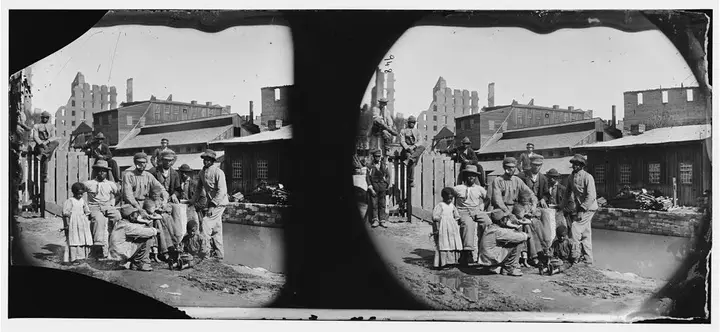
Black settlers who believed they had secured the foundation of their freedom faced displacement, uncertainty, and the loss of their anticipated economic independence.
The reversal was devastating.
Families who had spent generations producing wealth through forced labor were once again denied a meaningful opportunity to acquire the land they worked.
Instead of widespread independent landownership, many formerly enslaved people entered sharecropping and tenant-farming arrangements.
These systems frequently trapped Black families in cycles of debt, dependency, and economic exploitation.
The nation had abolished slavery, but it had failed to provide formerly enslaved people with the economic foundation necessary to make freedom fully independent.
What Happened to the 400,000 Acres?
The approximately 400,000 acres designated under Sherman's order were never permanently distributed to all eligible formerly enslaved families.
Thousands of Black people settled on land under the order, but the federal government's subsequent reversal undermined their claims.
Some Black communities resisted displacement, and some families eventually purchased land independently.
Yet the broader federal opportunity for land redistribution was largely lost.
The significance of this decision extends beyond the families directly affected in 1865.
Land is a wealth-producing asset.
It can appreciate in value, generate agricultural income, support businesses, provide housing security, and be transferred to future generations.
When land remains in a family, its economic benefits can compound over decades.
When a family is denied that land, the lost opportunity can also extend across generations.
This is one reason the history of Forty Acres and a Mule continues to occupy such an important place in reparations discussions.
The promise was not simply forgotten.
It was partially implemented, then substantially reversed through government action.
The Generational Wealth That Might Have Been
Imagine a Black American family receiving 40 acres of productive land in 1865 and retaining it through successive generations.
That property might have supported farming, homeownership, entrepreneurship, education, and the accumulation of family assets.
Over time, descendants might have inherited not only land but also the economic stability and opportunities associated with property ownership.
Of course, landownership alone would not have eliminated the discriminatory laws, racial violence, financial exclusion, and other barriers Black Americans subsequently faced.
But access to land could have provided an important economic foundation.
Instead, generations of Black Americans confronted additional obstacles to building and retaining wealth, including discriminatory lending, racially restrictive housing practices, segregation, unequal access to federal programs, and documented episodes of Black land dispossession.
These policies and practices compounded the disadvantages created by slavery and the failure of Reconstruction.
The modern racial wealth gap cannot be attributed to one historical decision alone.
However, the reversal of Forty Acres and a Mule illustrates an early moment when federal policy could have helped formerly enslaved Americans build independent wealth—and instead largely restored valuable property to former slaveholders.
Why Forty Acres and a Mule Matters to Reparations Today
The contemporary reparations movement asks a fundamental question:
What does a nation owe the descendants of people whose forced labor helped build its wealth, particularly when government policies subsequently obstructed their ability to accumulate assets?
Forty Acres and a Mule provides a concrete historical example of a government-backed effort to address the economic consequences of slavery.
It also demonstrates how quickly that effort was reversed.
This history matters because reparations are not merely a discussion about slavery as an institution that ended in 1865.
They also concern the policies that followed emancipation and the continuing economic consequences of those policies.
Descendants of people enslaved in the United States are owed reparations for American slavery, its aftermath, and subsequent government-sanctioned discrimination.
Potential remedies discussed in modern reparations proposals include direct monetary compensation, land-related remedies, housing assistance, educational investments, and other measures intended to address documented historical harms.
Different proposals have different eligibility standards, funding mechanisms, and legal considerations.
The historical record does not establish that every descendant today possesses an enforceable legal claim to 40 acres. Sherman's order was a wartime military directive, not a permanent federal compensation statute.
Nevertheless, its reversal remains powerful evidence of how government decisions shaped the economic opportunities available to newly freed Black Americans.
From Reconstruction to the Modern Reparations Movement
Today, reparations initiatives are being debated and developed at local, state, and national levels.
California's Reparations Task Force, established under Assembly Bill 3121, published its final report in 2023, documenting historical discrimination and recommending potential remedies.
The federal proposal commonly known as H.R. 40 seeks to establish a commission to study slavery, subsequent discrimination, and possible reparations proposals.
The number 40 itself is a deliberate reference to the historic promise of Forty Acres and a Mule.
These efforts reflect a broader argument: that meaningful repair requires more than acknowledging past injustice.
It requires examining how historical policies produced measurable economic disadvantages and determining what forms of redress are appropriate.
The story of Forty Acres and a Mule belongs at the center of that examination because it reveals that the question of economic compensation did not begin in the modern era.
It was being debated while slavery was ending.
Reparations Are About Inheritance, Not Charity
The language used to discuss reparations matters.
When reparations are framed solely as government assistance, the historical basis for the claim can become obscured.
We are not asking for financial support disconnected from the nation's past.
We are demanding repair for uncompensated labor, property deprivation, discriminatory government actions, and the economic opportunities denied to earlier generations.
Forty Acres and a Mule illustrates why inheritance is central to that conversation.
Families build wealth not only through what they earn during their lifetimes but also through what previous generations are able to leave behind.
A home, a farm, a business, or a financial asset can change the economic trajectory of an entire family.
When an opportunity to establish that foundation is withdrawn, the consequences can reach far beyond the original generation.
Reparations are not charity. They are a demand for accountability, repair, and recognition of a historical debt.
The Promise Was Broken. The History Remains.
In 1865, formerly enslaved Black Americans stood at a defining moment in the nation's history.
After generations of forced labor, they sought the ability to own land, support their families, establish independent communities, and pass wealth to their children.
For a brief period, federal policy appeared to recognize the importance of that economic independence.
Then the promise was largely taken away.
The story of Forty Acres and a Mule is therefore not simply a story about a failed land policy.
It is a story about who was allowed to accumulate wealth, whose property rights were restored, and whose opportunity to build an economic inheritance was sacrificed.
More than a century and a half later, these questions remain relevant.
The land may have been returned to former owners, but the historical record of that decision cannot be erased.
Understanding what happened is essential to understanding why the demand for reparations continues.
The promise of Forty Acres and a Mule was broken in 1865. The demand for justice did not end there.
Continue the Conversation
What might Black American generational wealth look like today if formerly enslaved families had retained the land allocated to them during Reconstruction?
Should modern reparations proposals account for the reversal of Forty Acres and a Mule?
And what would meaningful economic repair look like for descendants of American slavery?
At Reparations News, we believe understanding history is essential to advancing informed conversations about justice, accountability, and inheritance.
Know the history. Understand the debt. Demand the repair.
Historical Sources & Further Reading
- National Archives — Milestone Documents and historical records
- National Park Service — Reconstruction Era history
- Smithsonian Magazine — Where Did the Idea of 40 Acres and a Mule Come From?
- California Department of Justice — Reparations Task Force and Final Report
- Congress.gov — Federal legislation, including H.R. 40
Read Reparations: Our Rightful Inheritance · Explore the History Section · Get Reparations News Updates
See the receipts · 2 primary sources
Civic action dispatch
Now act on it
A debt documented is not yet a debt collected. See it, prove it, force it.
- 01Federal + state bills
Step 01 · Monitor
Track the bills
Follow active reparations measures in Congress and the states.
Open tracker - 023,142 counties
Step 02 · Document
Verify the receipts
Find slave schedules, Freedmen's records and land deeds in your county.
Search your county - 03Scripts + caucuses
Step 03 · Mobilize
Organize your district
Call your lawmaker, reach your Black Caucus and start a local group.
Get the playbook
Priority action · 30 seconds
Call your state lawmaker today
Copy the script, then find your representative's number on the community page.
The Reparations Brief
Stay Informed.Stay Connected.Know Your History.
Get important reparations developments, historical research, legislative updates, and original reporting delivered to your inbox.
We use your email only to send The Reparations Brief. Unsubscribe anytime. See our Privacy Policy.