Take ActionGenealogy
Researching Your Family History
Where to start with census records, Freedmen's Bureau files and church archives.
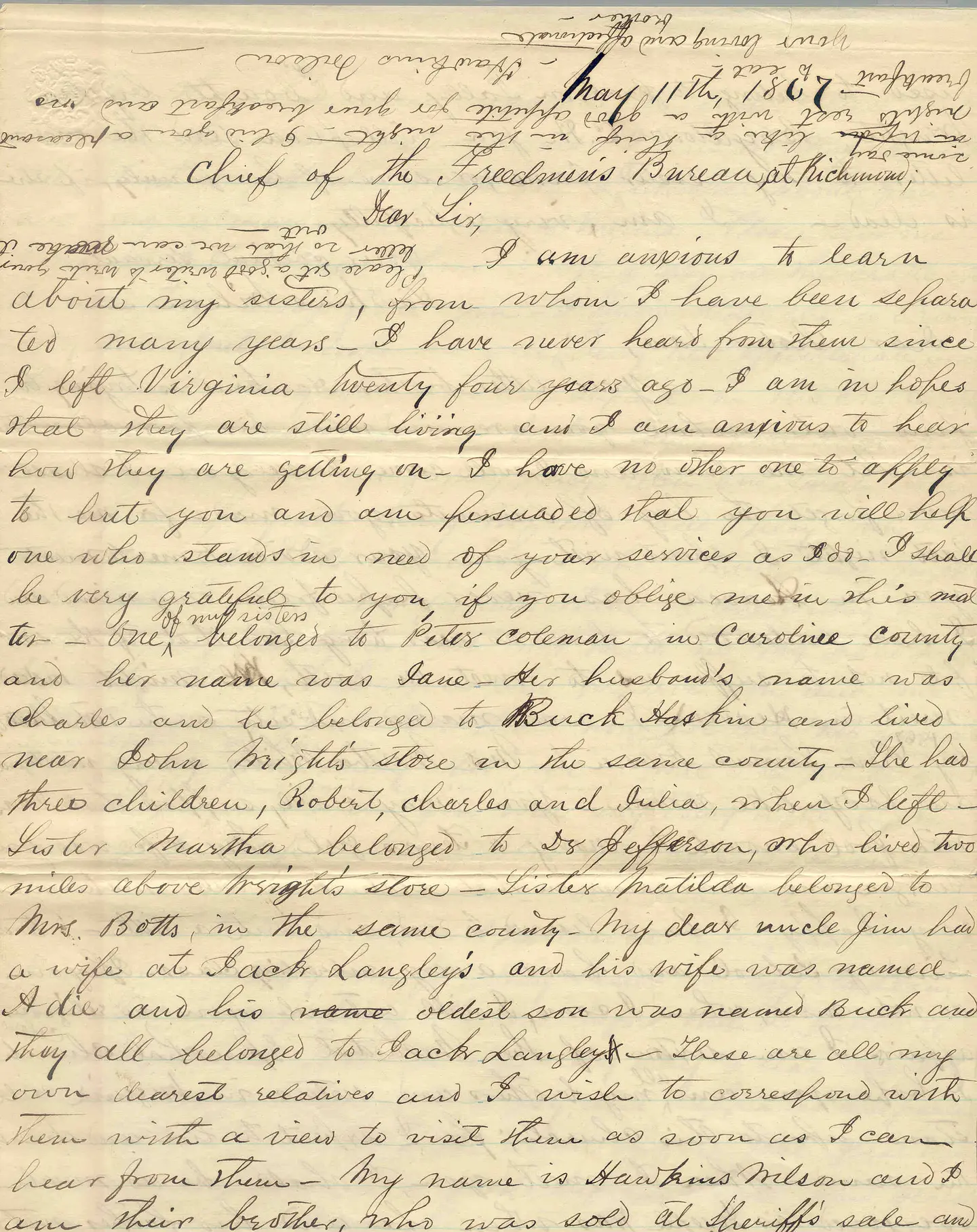
Start with yourself and work backward, documenting each parent-child relationship before moving to another generation. Census records, vital records, Freedmen’s Bureau files and local archives help reconstruct family history. A surname, DNA estimate or online tree does not independently prove descent from a person enslaved in the United States.
For Foundational Black Americans, genealogy can illuminate the inheritance slavery interrupted. Research is valuable in its own right, but does not guarantee eligibility for an existing or future reparations program.
Begin at home—with permission
Write down full names, alternate spellings, approximate dates and places of birth, marriage, death and residence. Choose a manageable question, such as identifying a grandparent’s parents.
Ask relatives whether they want to be interviewed. Obtain permission before recording, sharing photographs or publishing stories. Family history can involve adoption, separation, violence or information someone wants kept private.
Scan documents without altering originals. Label each scan with its source and the person supplying it. Distinguish what the document says from a relative’s explanation. Keep a log of sources searched, dates, results and next steps—including unsuccessful searches.
Build the chain one generation at a time
Birth, marriage and death records can identify relationships, but access restrictions vary. Contact the relevant state or county office through its official website.
Compare records. A death certificate’s parent information may come from someone unfamiliar with the deceased person’s childhood. Ages and name spellings differ across censuses.
Record why you believe two documents concern the same person. Compare spouses, children, occupations, residence and neighbors rather than accept a name match. Online trees suggest leads; examine their evidence. Preserve conflicting information rather than force a convenient conclusion.
Use the census to establish place and household
Work backward through available federal censuses and inspect original images. Indexes misread names, and household context may disappear from search results.
For many families tracing formerly enslaved ancestors, 1870 is a crucial bridge. It was the first federal census after emancipation to list formerly enslaved people by name across the population. That does not mean everyone was successfully enumerated. Nor were all Black Americans enslaved: free Black people appear by name in earlier census records.
Record the county, township and nearby households. Geographic continuity can guide a search when a surname changes or someone moves.
Cross into Reconstruction records
With a likely ancestor and location near emancipation, search that area’s Freedmen’s Bureau records. Files include labor contracts, marriages, complaints, assistance and family reunification materials. National Archives guides explain the bureau’s administrative structure.
Try spelling variations and more than one name. Files may be arranged by office, employer, official or locality rather than ancestor. Freedman’s Savings and Trust Company records are a separate collection and may provide family details. Military service and pension files can also establish relationships.
An absent record does not disprove a life. Collections are incomplete and not everyone interacted with the same institutions.
Approach slavery-era records carefully
The 1850 and 1860 slave schedules generally identify enslavers and describe enslaved people by characteristics such as age and sex, rather than naming them. An age match is a lead—not identification. A shared surname with a nearby enslaver is insufficient proof.
Use probate files, estate inventories, deeds, court records and plantation papers to test connections. Church registers and local collections may document relationships missing from federal records. Ask repositories about holdings, digitization, access and copying fees.
County boundaries change. Establish the relevant jurisdiction for each date. Tracing Stolen Land offers methods for property records that may intersect with family research.
Protect living people and preserve uncertainty
Maintain a private master file and a separate shareable version. Remove living people’s birth dates, addresses and sensitive identifiers from public trees.
DNA testing is optional. Examine matching, research participation, sharing and deletion policies first. Results may reveal unexpected relationships; they do not independently establish a documented chain to one enslaved ancestor.
Label conclusions established, probable or unresolved. Back up your files and preserve repository, collection, page and image citations.
Family history is not an eligibility ruling
Do not shape research around imagined program rules or pay someone promising guaranteed reparations eligibility. Lineage research and legal eligibility are distinct tasks.
Reparations are a debt owed to descendants of American slavery, grounded in federal responsibility for the labor and inheritance taken from our families. Reconstruction: The First Attempt at Repair supplies context. Research recovers names, relationships and choices obscured by slavery’s records—even when questions remain unanswered.
See the receipts
See the receipts · 3 primary sources
Civic action dispatch
Now act on it
A debt documented is not yet a debt collected. See it, prove it, force it.
- 01Federal + state bills
Step 01 · Monitor
Track the bills
Follow active reparations measures in Congress and the states.
Open tracker - 023,142 counties
Step 02 · Document
Verify the receipts
Find slave schedules, Freedmen's records and land deeds in your county.
Search your county - 03Scripts + caucuses
Step 03 · Mobilize
Organize your district
Call your lawmaker, reach your Black Caucus and start a local group.
Get the playbook
Priority action · 30 seconds
Call your state lawmaker today
Copy the script, then find your representative's number on the community page.
The Reparations Brief
Stay Informed.Stay Connected.Know Your History.
Get important reparations developments, historical research, legislative updates, and original reporting delivered to your inbox.
We use your email only to send The Reparations Brief. Unsubscribe anytime. See our Privacy Policy.